
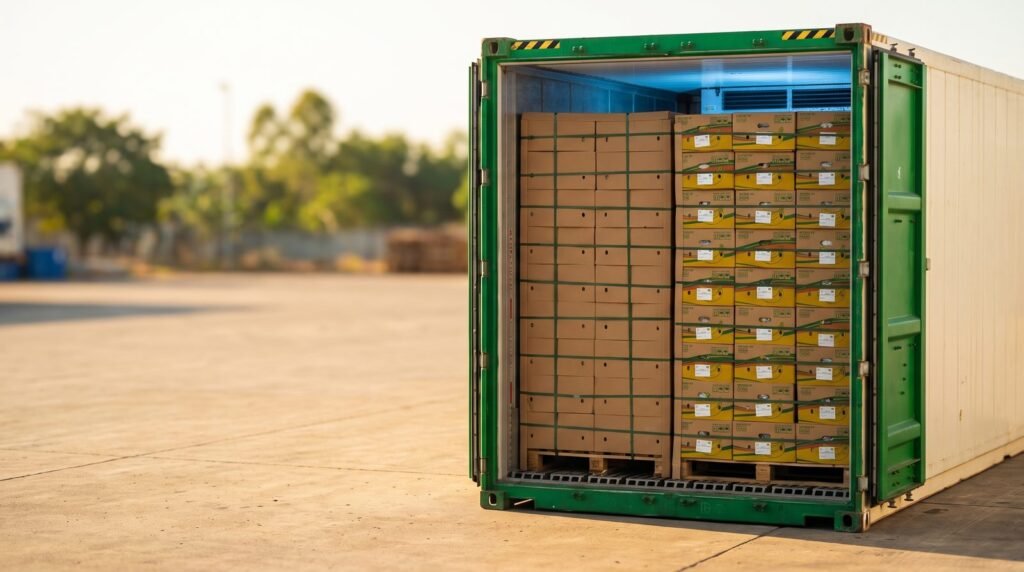
A distributor who sells four pallets of bananas a week asks a reasonable question and gets an answer that sounds unreasonable. The question is whether they can start with two pallets. The answer, from almost every exporter, is one full reefer. The minimum order quantity banana container terms impose is not a negotiating position — it comes from what the fruit needs in transit, and leaning on it does not move it. What does move is how you buy around it.
Below: where the floor comes from, what one container actually holds in cartons and tonnes, and the four things smaller buyers do instead of waiting for their volume to catch up.
Minimum order quantity banana container: one reefer, and why
Bananas travel at one narrow temperature, and they travel alone. Cargo carriage guidance puts the optimum carrying temperature at 13.3°C, the holding range for green fruit between 13.2°C and 14.0°C, and the onset of chilling injury below roughly 13°C. Humidity belongs between 85 and 95 per cent, and the container ventilation setting at 25 cubic metres an hour.
None of that is what sets the order floor, though. This is: bananas are not to be shipped with ethylene-producing commodities. Their sensitivity to ethylene is rated high, and ethylene inside a sealed box causes premature and rapid ripening during the voyage. That one line removes the usual route by which a small buyer moves a small quantity across water.
Groupage does not work for this fruit
Less-than-container-load freight works because unlike goods tolerate the same box. Cartons of dry goods do not care what shares the floor with them. A pallet of avocados, mangoes or tomatoes riding at a banana setpoint is an ethylene source a few centimetres away from fruit that has to arrive green.
There is no partial fix. You cannot wrap the problem away, and a bulkhead inside a reefer does not create two atmospheres — the air is recirculated through the whole chamber by design. So the smallest shipping unit for green bananas is a container that holds nothing else.
A part-loaded reefer is worse than a full one
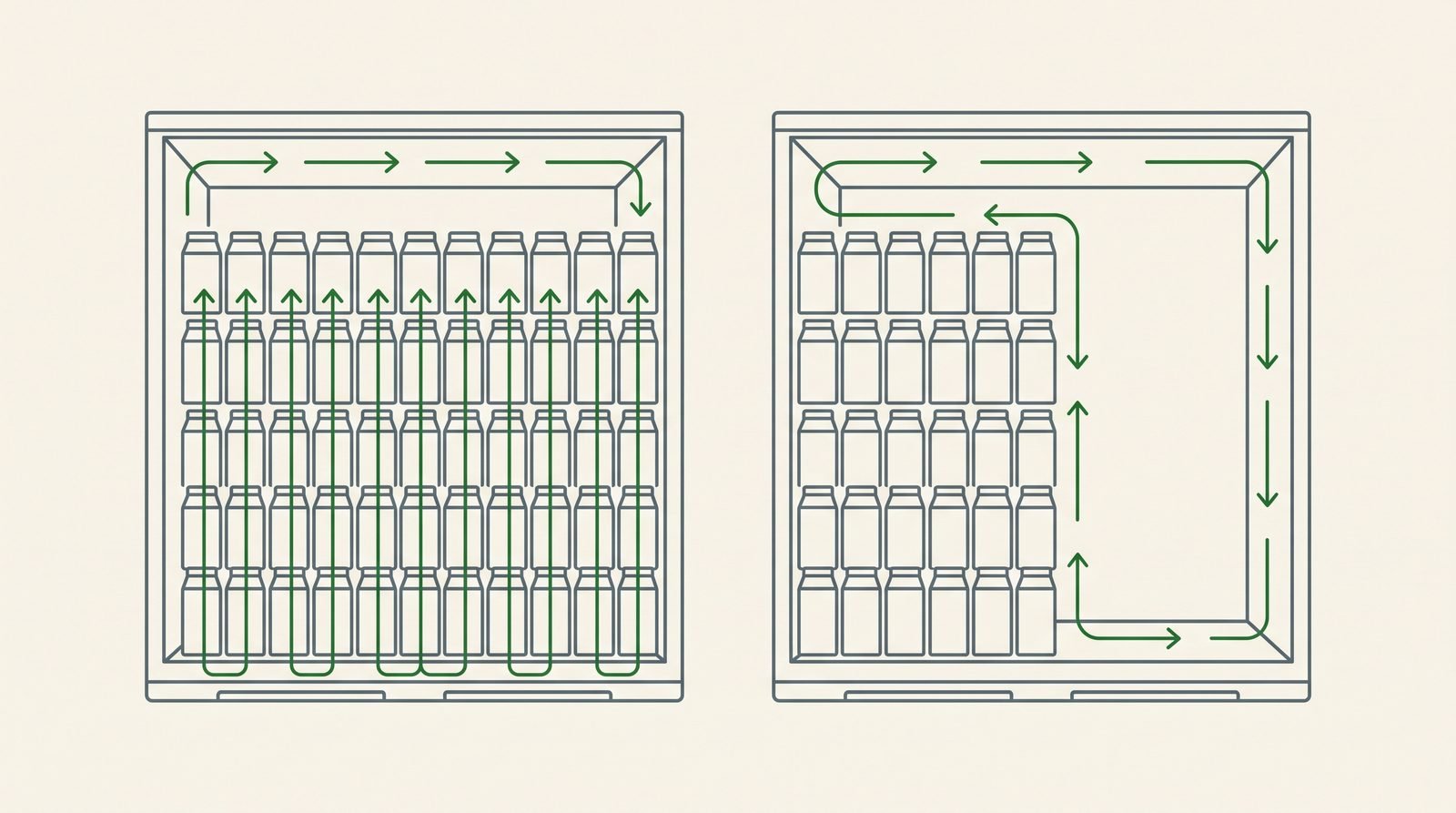
The second reason is airflow. Cold air is pushed along the floor channels and has to come up through the stow before returning along the ceiling. A stow that is even and full forces it through the cartons. A stow that is half the height lets the air take the empty lane instead, and the fruit that most needs cooling gets the least of it.
That is why half-filling a reefer is not a discount on the risk; it raises it. The mechanics of the setpoint, the load line and the return air path are covered in our note on reefer container settings for bananas.
What one container actually holds
Before deciding whether the floor is too high for you, it helps to see it in cartons rather than in the abstract.
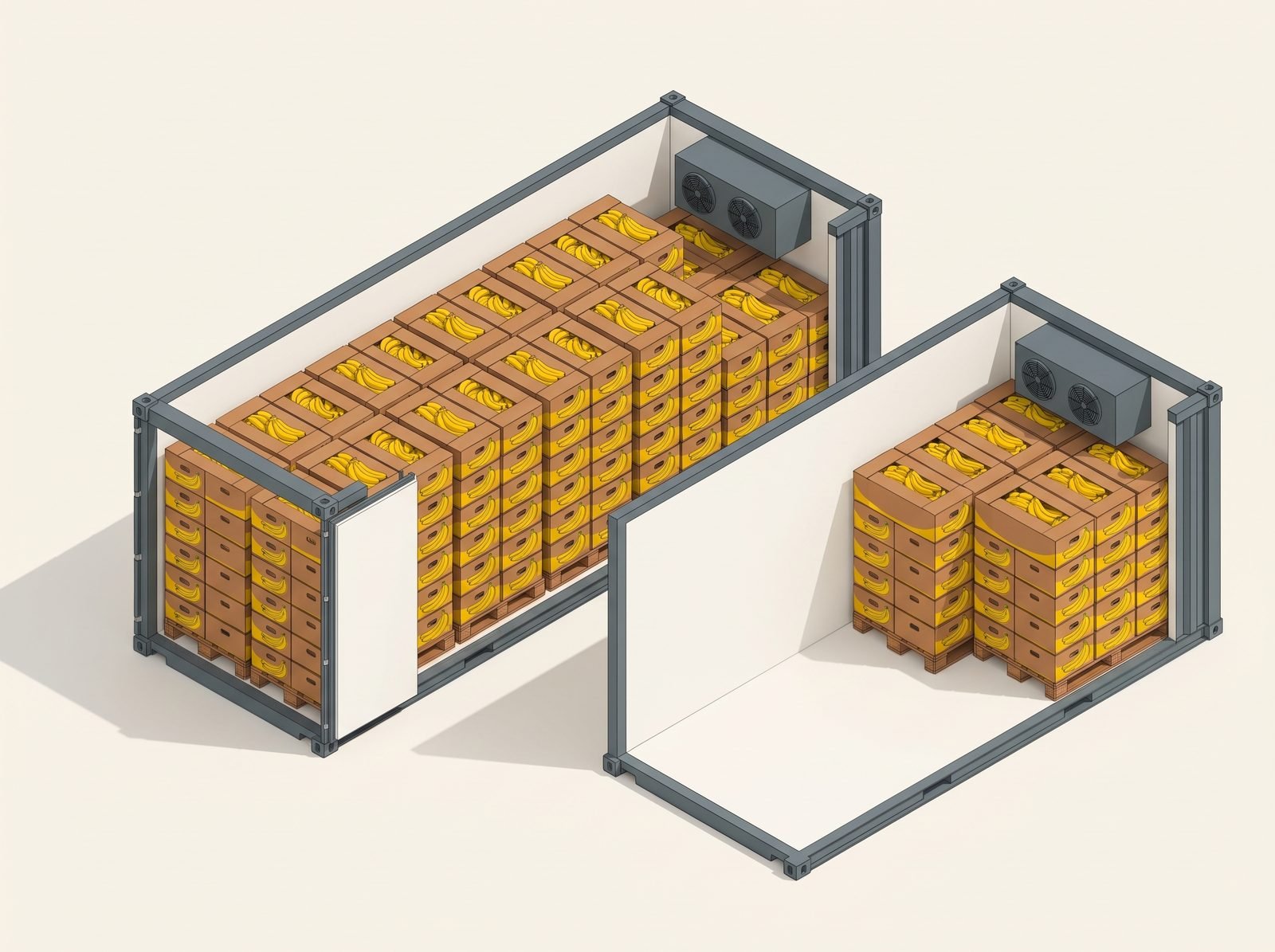
- 40 ft high-cube reefer, palletised. About 1,200 cartons on roughly 20 pallets, which at 13.5 kg of fruit a carton is about 16.2 tonnes
- 40 ft high-cube reefer, floor-loaded. About 1,540 cartons, roughly 20.8 tonnes of fruit in the same unit for the same freight
- 20 ft reefer. Around 28 cubic metres of internal volume, a tare of about 2,900 kg and a maximum payload of 27.49 tonnes
Read the last line twice. The payload on a 20 ft unit is higher than the fruit a 40 ft unit carries, which tells you that weight is never the binding limit on this cargo — volume is. Cartons, pallet pattern and whether you palletise or floor-load decide the number, not the plated maximum. Those trade-offs are set out in banana cartons and container loading.
Now do the arithmetic from your own side of the desk. A buyer selling two tonnes a week who takes 16.2 tonnes has bought eight weeks of fruit. Green life is measured in days, not weeks, so the back half of that container is not inventory — it is waste with a delivery date. This is the honest reason the floor hurts: not the cash, the clock.
Four ways smaller buyers do it
1. Take the 20 ft unit
The smaller reefer is the one real step down, and it is the option most often left out of a quotation because the 40 ft is cheaper per kilo. If your sell-through is five to nine tonnes a cycle, ask for the 20 ft price anyway and compare landed cost against the fruit you would have dumped.
2. Buy small, buy often
Frequency substitutes for size. Ocean services out of Ho Chi Minh City to Singapore run about four to five sailings a week with a port-to-port transit of four to five days, so the practical question is not how much you can store but how often you can receive. A 20 ft unit every fortnight moves the same annual volume as a 40 ft unit every six weeks, with a fraction of the exposure on each arrival. The lane detail is in Ho Chi Minh to Singapore shipping.
3. Split a container with another importer
Two buyers in the same market, one container, one shipper. This works, and it is not simple. One party is the consignee of record and clears the goods, which means one import licence carries both lots and one party absorbs the delay if the consignment is held. It works best when both buyers want the same pack size and the same arrival stage, because the container only has one setpoint.
4. Buy landed for a season, then go direct
Buying from a ripener or wholesaler in your own market costs more per kilo and teaches you what your customers actually take — which sizes move, what colour stage they want on delivery, how fast the shelf clears. Importers who skip this step tend to order a container of the wrong grade. A season of paying the margin is cheaper than that.
The ripening room, not the container, usually caps the order
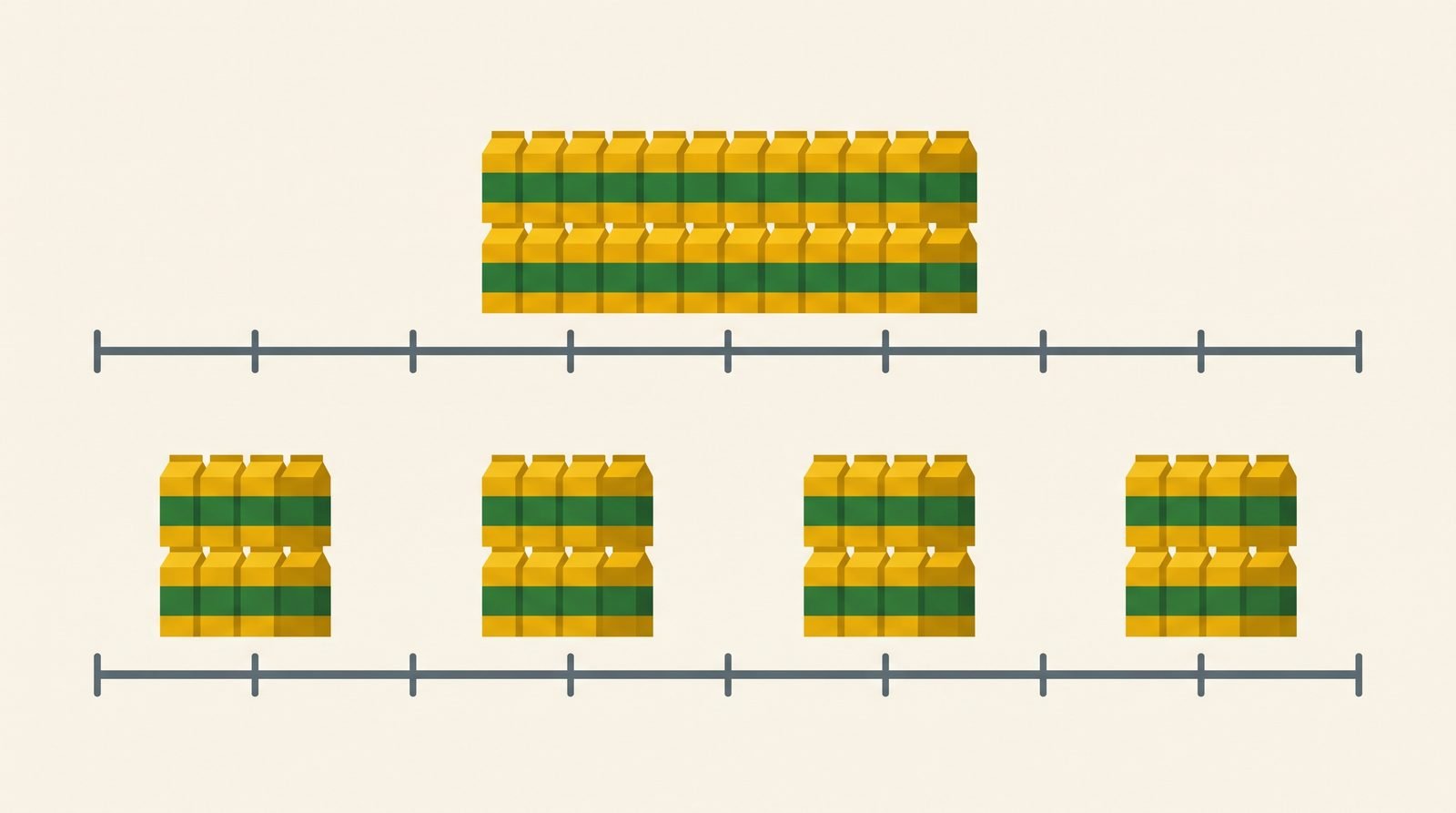
Green bananas arrive green. Somebody has to hold them at a controlled temperature and bring them on with ethylene on a schedule that matches the orders. A container of 16 tonnes needs ripening capacity sized to it, and most new importers discover their ceiling there rather than in their bank.
So size the order against the smallest of three numbers: weekly sell-through, ripening capacity per cycle, and the container sizes on the lane. Whichever is lowest is your real MOQ, and it is usually not the one the exporter quoted.
Working with Dragon Hub on a first order
Dragon Hub packs to the buyer’s carton weight and pack size rather than to a single house spec, we load 20 ft units, and we can pack two pack sizes in one container for one consignee when both want the same arrival stage. We will also say when a split does not work, because a container that arrives in the wrong condition costs more than the order was worth. Send your weekly volume, pack size and ripening setup with an enquiry through our products pages and we will come back with the container size that fits rather than the one that sells best.
Frequently asked questions
What is the minimum order for bananas from Vietnam?
One refrigerated container. A 20 ft reefer is the smaller option and a 40 ft high-cube the standard one, carrying roughly 16 to 21 tonnes of fruit depending on whether it is palletised or floor-loaded. There is no half-container option for green bananas.
Can bananas be shipped LCL?
In practice, no. Carriage guidance states that bananas are not to be shipped with ethylene-producing commodities, and their ethylene sensitivity is high. A shared reefer recirculates one body of air through all the cargo, so other produce in the box ripens the bananas during the voyage.
How many cartons fit in a 40 ft reefer?
Roughly 1,200 cartons palletised on about 20 pallets, or roughly 1,540 floor-loaded. At 13.5 kg a carton that works out at about 16.2 and 20.8 tonnes of fruit respectively. Floor-loading buys the extra volume and costs you handling time at both ends, plus more touches on every single carton.
Yes, if they are in the same market and agree on spec. One of them has to be the consignee of record, clear the goods and carry the risk of a hold, then hand over the second lot after release. Agree who does what before the booking, not after arrival.
Sources
- Cargo Handbook, Bananas — carriage temperature, humidity, ventilation setting, ethylene sensitivity and the rule against stowing with ethylene-producing commodities
- 20 ft reefer container specifications — internal volume, tare and maximum payload
- Ocean freight, Vietnam to Singapore — sailing frequency and port-to-port transit on the lane
