
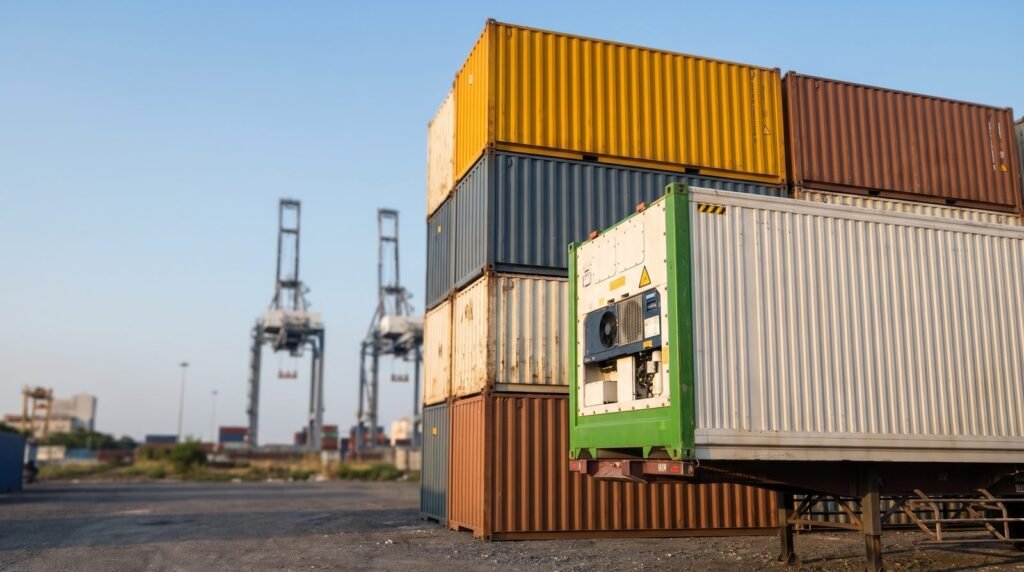
Ask a carrier for a transit time from Vietnam to Jebel Ali and you get a single number. Ask what happens in the middle of it and the conversation usually stops. Services on that lane run via a hub rather than port to port, the box changes vessel there, and the days it waits are the banana green life transshipment risk that no quotation itemises.
This is not a story about a container cooking in a yard. A properly loaded reefer is far steadier than that, and the carrier documentation says so plainly. The cost of a hub is counted in days off the fruit’s green life budget and in connections that slip. Both are visible before you book, if you ask the right four questions.
Transit time is a vessel figure, not a fruit figure
Sailings from Vietnam to the Gulf run via a hub rather than port to port. Indicative ocean time on the lane is quoted as roughly two to four weeks, with the explicit caveat that hub choice strongly affects the total and that a missed connection rolls the cargo onto the next mainline vessel.
Now set that range against what the fruit has to spend.
| Figure | Range |
|---|---|
| Green life potential, mature-green Cavendish in air at 14 °C | 2–4 weeks |
| Indicative ocean time, Vietnam to the Gulf, via hub | 2–4 weeks |
Those are the same range. The ocean leg alone can consume the entire budget, and nothing in that figure covers the hub wait, clearance, or the inland run to the ripening room. A transit time is a statement about vessels; green life is a statement about fruit, and only one of them is being quoted to you.
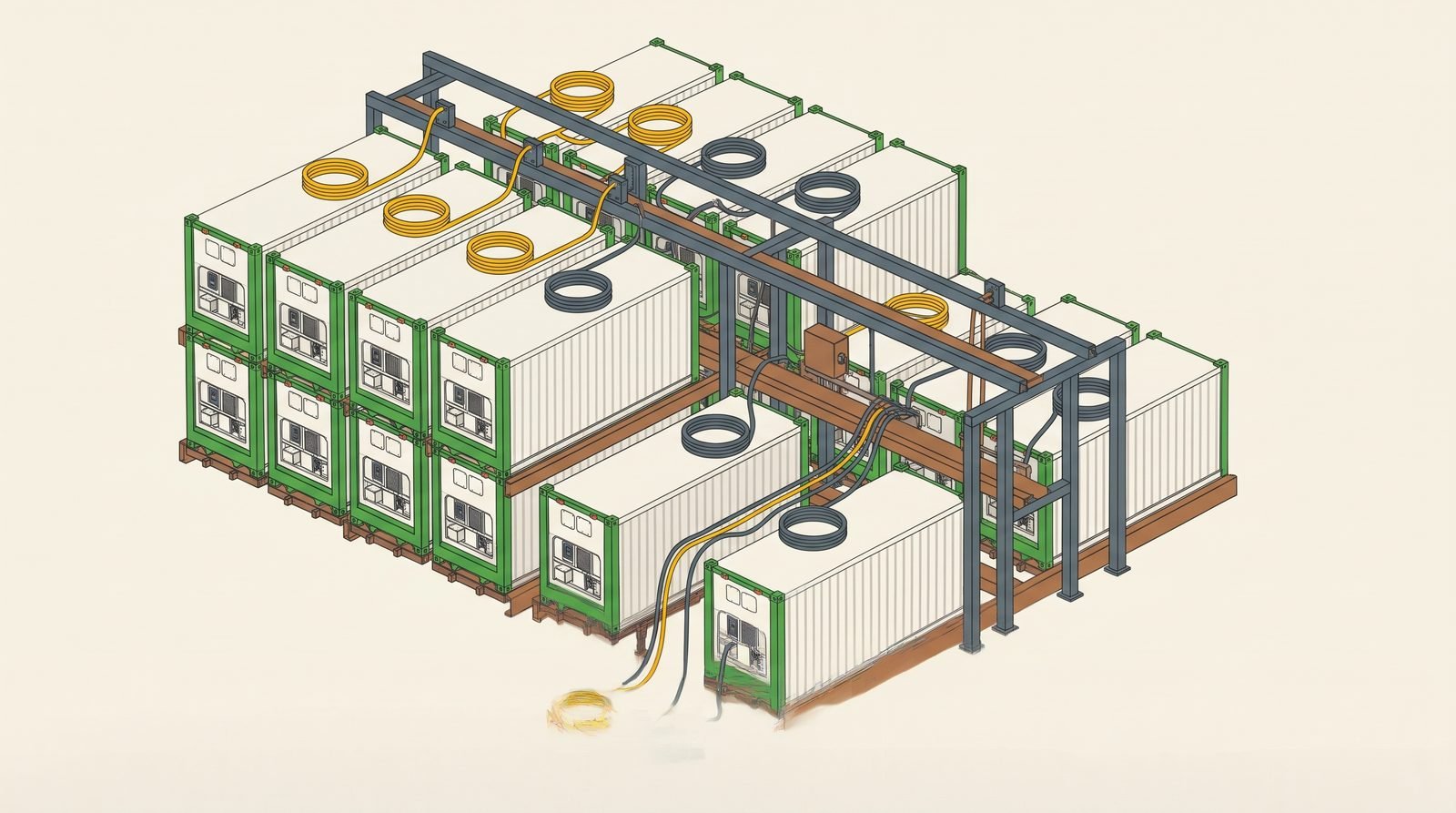
The banana green life transshipment risk is a clock, not a thermometer
Green life is a budget. It is set at harvest, spent by elapsed time and temperature, and it never refills. Our guide to how many days of green life you actually have covers how a single day of field heat before cooling costs roughly six days at the far end.
A hub spends that budget in the most ordinary way possible: the box sits. It is usually cold while it sits, and it is still losing days. This is why the useful question is not whether the fruit will survive the hub, but how many days the hub is scheduled to take and what the budget looks like after they are deducted.
What actually happens when the power comes off
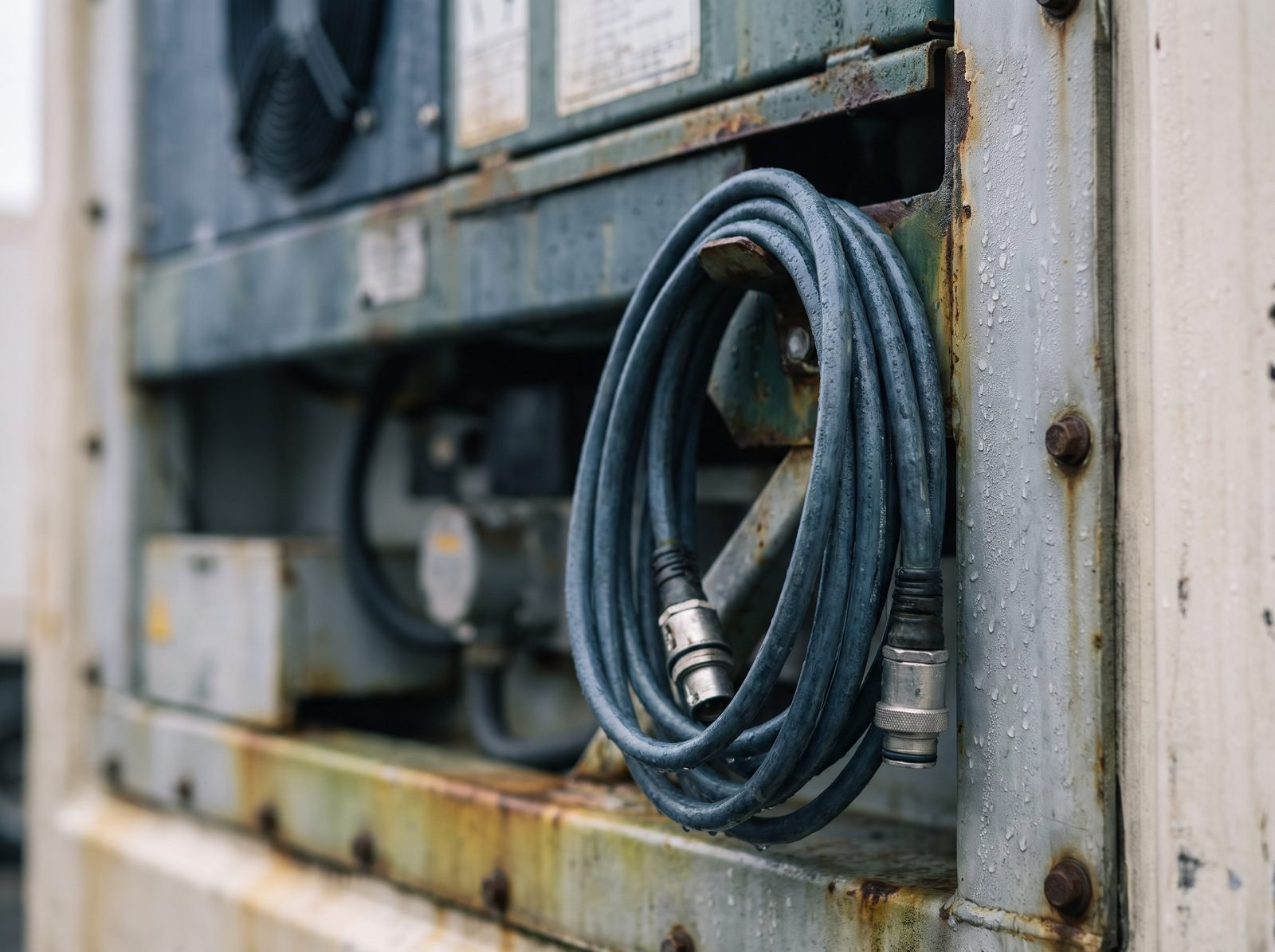
A reefer is not plugged in continuously from stuffing to delivery, and carriers do not pretend otherwise. Hapag-Lloyd’s reefer cargo handling guidance states that no active cooling normally happens during gate-in and gate-out at the terminal, or during loading and discharging operations, because of energy power-offs. Its own loading procedure is to switch the unit off during loading and restart it once the doors are closed.
The same document is specific about who gets hurt. Those power-offs can cause major temperature deviations in reefer containers filled lightly, with low thermal mass, which is why the guidance sets a minimum cargo weight of 3,000 kilograms in a 20-foot reefer and 5,000 kilograms in a 40-foot unit. A full load of bananas is nowhere near that floor. The fruit is its own thermal ballast.
The measured behaviour backs this up. In one documented power outage on a loaded unit held at a 2 °C setpoint, return air rose from 4.6 °C by just 0.4 °C across fourteen hours without power. When power came back, return air spiked to 10.5 °C and then settled to its original reading within an hour and a half, which is the sensor seeing warm pocket air flushed out of the stow rather than the cargo itself warming and cooling.
Equipment guidance puts a working window of four to six hours on a loaded reefer holding temperature unplugged, and recommends keeping unplugged moves nearer two hours. Terminal tariffs tell you what is treated as normal: at the Georgia Ports Authority, billable plug-in time starts only three hours after the container enters the terminal. A multi-hour gap is routine, not an incident.
Respiration does not pause while the unit is off
What the unit’s downtime does change is ventilation. At 12.5 °C a green banana gives off about 18.5 mg of carbon dioxide per kilogram per hour, and a finger that has begun to turn gives off roughly 62 mg, along with the heat that comes with it. With the machinery stopped there is no internal circulation and no fresh air exchange, so that carbon dioxide and that heat stay in the stow.
Over three hours at a gate this is immaterial. Over a long yard wait with the unit down it is not, and it compounds: bananas are also moderate ethylene producers at 1 to 10 microlitres per kilogram per hour. The fields that hold all of this in check are in our guide to reefer container settings for bananas.
The failure that actually costs a container
The expensive event at a hub is not thermal. It is the rolled connection. If the box misses its mainline vessel, the wait is measured in days against the next sailing, not in hours against a power socket. The container is plugged in, the trace looks clean, and the fruit arrives with a week less margin than the receiver planned around.
That shows up at the far end, not at the port. Fruit that spent most of its green life in transit either begins turning in the box or reaches a ripening room with too little life left to run a normal cycle, and the loss gets booked against quality rather than scheduling. On the Gulf lane, where clearance at Jebel Ali adds its own days after discharge, the margin for a rolled sailing is thin.
Four questions to put in the enquiry
- Which hub, by name? Not “via transshipment”. The hub determines both the wait and the frequency of onward sailings.
- How many days are scheduled at the hub? Ask for it separately from the ocean figure, then add it yourself.
- Is the unit plugged in while it waits, and who reads it? A yard wait on power is acceptable. A yard wait nobody is monitoring is a different product.
- What is the next sailing if the connection is missed? Weekly and twice-weekly are very different answers for fruit.
Then ask your supplier for the figure that matters more than all four: days from packhouse to your ripening room door, hub wait included. That is what the harvest cut should be made against.
How Dragon Hub plans around a hub
We treat routing as part of the specification, not something the forwarder settles afterwards. Harvest maturity, pack date and stuffing date are set against the full door-to-door day count for the chosen service, so the fruit is cut for the route it is actually taking. Tell us the hub and the day count you are working with and we can quote the cut against it. Our product range and packing specifications are the place to start.
Frequently Asked Questions
How long can a reefer container be unplugged?
Equipment guidance puts four to six hours on a fully loaded unit, with two hours preferred for unplugged moves. Carriers expect short power-offs during loading, discharge and gate moves as normal practice. Lightly loaded containers drift much faster, which is why minimum cargo weights are specified.
Does transshipment damage bananas?
Not usually by temperature. A full reefer has enough thermal mass to ride out the hours it spends unplugged during handling. The damage comes from elapsed days, because green life is a fixed budget, and from missed mainline connections that add a sailing interval to the voyage.
How many days of green life does a banana have?
Postharvest reference data puts green life potential for mature-green Cavendish at two to four weeks in air at 14 °C, and four to six weeks under controlled atmosphere. The spread is handling, not variety: delay between cutting and cooling is the single largest factor.
Is there a direct service from Vietnam to Jebel Ali?
Carriers publish the lane as a via-hub service rather than port to port, with indicative ocean time of two to four weeks. The hub chosen changes both the duration and its reliability, and a missed connection adds a full sailing interval.
