
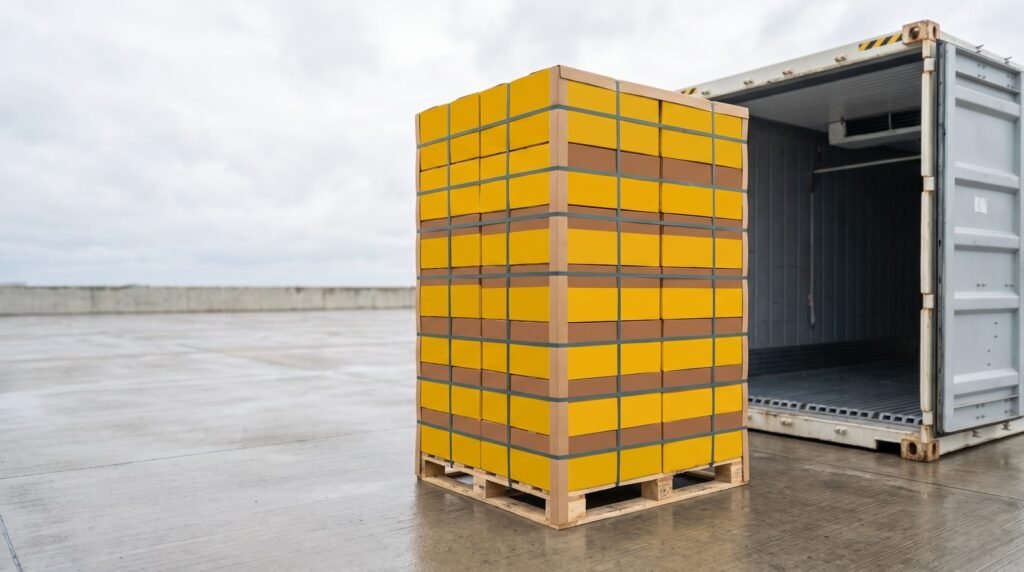
Two different things get called paperwork when a reefer of bananas lands in Dubai, and mixing them up strands a first shipment. One set is federal and about the plant: the Ministry of Climate Change and Environment regulates imports of raw agricultural commodities and plant quarantine. The other is municipal and about the food: Dubai Municipality inspects at the port, approves labels, draws samples and releases the consignment. This uae banana import documents checklist separates the two, lists what travels with the container, and names the label field that most often holds fruit.
The useful surprise is how much of the burden is not paperwork. Fresh fruit is exempt from several requirements processed food carries, and one document buyers are routinely told to budget for is not required for bananas.
The Ministry of Climate Change and Environment, MOCCAE, sets and enforces federal food safety regulation and runs veterinary and plant quarantine. It is the authority behind import rules for raw agricultural commodities, plants and seeds.
The municipalities do the work you will feel. In Dubai, the municipality oversees port inspection, testing, label approval and release of the shipment. It also interprets the federal rules locally, which is why a broker’s answer in one emirate is not automatically the answer in another.
Dubai Customs reinforces the split in its own restrictions table: vegetable products and prepared foodstuffs sit under Dubai Municipality’s permit authority. The “permit” a new buyer hears about for fruit is municipal food clearance, not a federal plant import permit.

The uae banana import documents checklist, in the order each item is needed
For one reefer container of Cavendish bananas arriving by sea:
- Commercial invoice — description, quantity, unit price, terms of sale
- Packing list — cartons, net and gross weight, pack size, pallet count
- Bill of lading from the carrier, naming the consignee who holds the trade licence
- Certificate of origin for the goods
- Delivery order, which Dubai Customs lists specifically for sea freight
- Phytosanitary certificate from the plant protection authority in the exporting country, carrying any pest freedom declaration the UAE asks of that origin
- Residue test results against the national maximum residue limits standard
- Carton labelling in Arabic, with country of origin and a production date or harvest year plus packing date
- The food import request, filed electronically with the port of entry, the transport document number, the arrival date and the country of origin
- The customs declaration of the right type for where the cargo is going, which is a separate decision from the food side
The first five are the standard Dubai Customs document set for goods entering the local market from outside the customs union. The rest are the fruit-specific layer on top, filed through Dubai’s own platforms: one handles registration and label work, and an integrated platform combines food import requests, registration and customs services in one place.
Three things bananas do not need
A federal import permit
Permits from MOCCAE attach to living material: live animals and birds, planting material, seeds and seedlings, skins and hides. Fresh fruit for eating is not on that list. The Australian government’s published record of UAE requirements puts it plainly — phytosanitary certificate required, import permit not required. Budget the certificate, not the permit.
A label assessment
Dubai Municipality’s own guide to its registration and label assessment system lists fresh fruits and vegetables among the items that do not need label assessment, alongside bulk grains, pulses and nuts. That matters commercially, because label assessment is where the first-time queue lives: registration with label assessment runs five working days, and a new product registration requires testing at the municipality’s central laboratory, which can take five working days again.
Bananas in bulk export cartons skip that path. The exemption is for label assessment, not for labelling.
An expiry date
Fresh fruits and vegetables are exempt from the expiration date requirement that governs packaged food in the UAE. What replaces it is not nothing: the standard calls for a production date or harvest year and a packing date, depending on the product.
The date field that holds containers
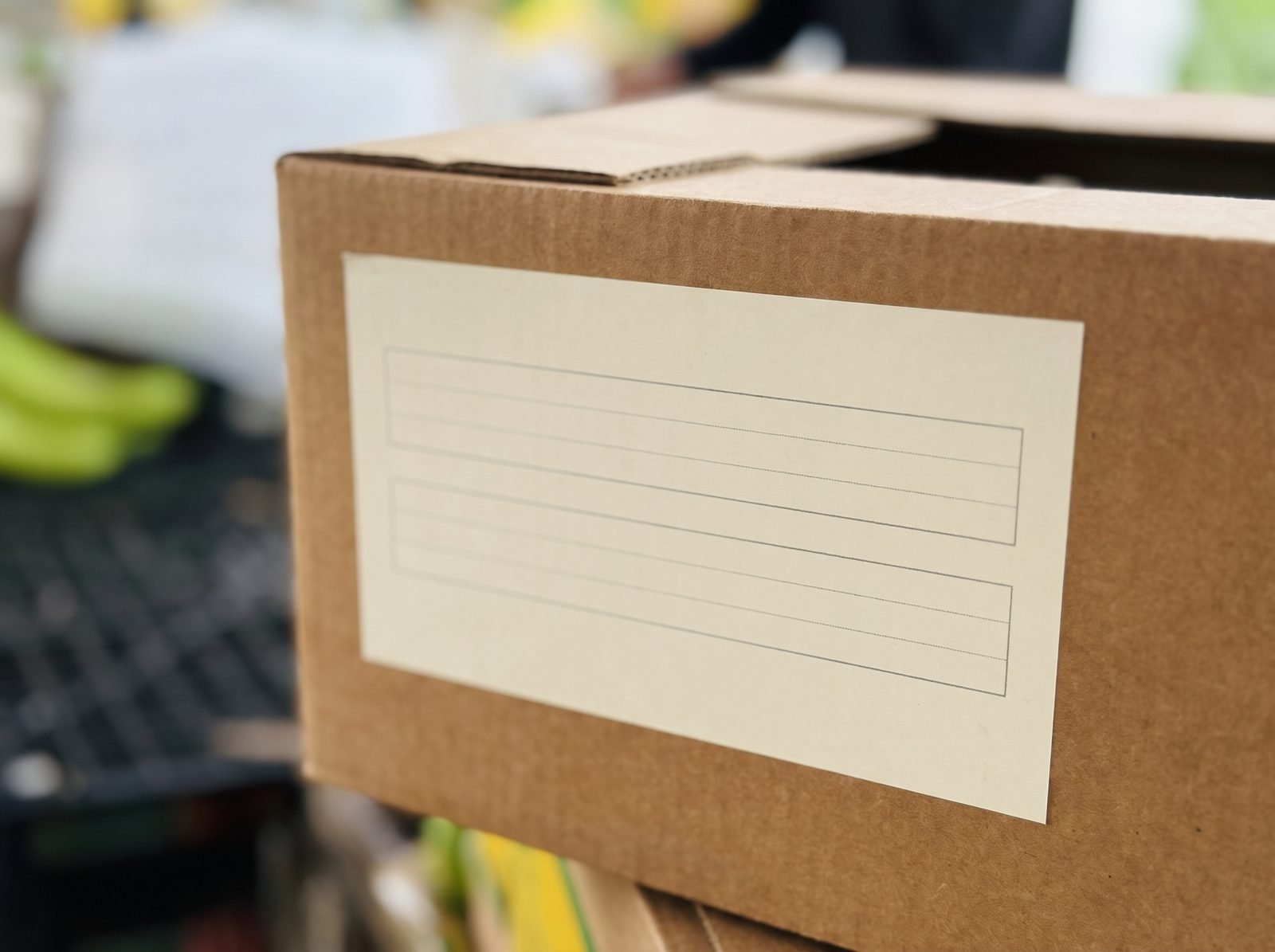
This is the detail worth pinning above the packing line. Production and expiry dates in the UAE must be engraved, embossed, printed or stamped directly onto the original label or the primary packaging, and dates printed only on a sticker are not accepted. Arabic stickers are allowed as a translation, but they must be approved and applied before export, not at the port.
Put those rules together and the consequence for a banana carton is concrete: the packing date has to be in the print file or ink-jetted at the packhouse. It cannot be added on arrival with a label gun — the shortcut a shipment reaches for when someone notices the field is blank. Only one set of dates is permitted, so a corrected second date beside the first is not a fix either.
Which residue limits apply
The governing document is the national standard for maximum residue limits for pesticides in agricultural and food products, and the edition on record for 2025 is the 2024 revision, not the 2019 version still quoted in much trade guidance. The regulator publishes a searchable database of approved pesticides and their limits — the place to check an active before the spray programme is set, not after.
Where the national standard has no figure for a commodity, the published approach is to fall back to Codex limits first, then the EU, then the United States. The US agricultural attaché report describes that order for rice specifically, so treat it as the pattern rather than a guarantee for every crop, and confirm the fallback with the laboratory before relying on it.
The practical failure is not a dirty sample. It is a clean report against the wrong panel: a screening suite that never tested the actives used in the growing area. Buyers who have read our overview of importing bananas to the UAE and the Gulf have the market side settled, and this is where the detail work starts.
Where the document set usually goes wrong
- The shipment does not match the filed record. Goods are inspected on arrival partly to confirm they match what was declared electronically, and a quantity or origin that drifted between booking and loading is a discrepancy the importer has to explain
- The packing date is missing from the print file. Producer and product description are usually there; the date is the field that gets dropped, and it cannot be rescued with a sticker
- Residue results test the wrong analytes for the origin, which reads as compliant and proves nothing
- The phytosanitary certificate lacks a declaration the destination expects from that origin, since those are set origin by origin
A detained or rejected consignment is notified through the same portal the request was filed in, and the appeal runs there too — while the reefer sits on power.
Buyers importing from Vietnam for the first time may also want the exporter-side view of the same container, which is in our checklist for importing bananas from Vietnam.
How Dragon Hub prepares documents for the UAE
Dragon Hub packs and exports Cavendish bananas to supermarket and wholesale buyers in Asia and the Middle East. Send us the port of entry, the declared product code your broker uses and the residue panel your laboratory runs, and the carton print file, invoice wording and test scope get built to those rather than to a house default. Specifications are on the product range page.
Frequently asked questions
Do bananas need an import permit to enter the UAE?
No. Federal import permits cover live animals and birds, planting material, seeds and seedlings, and skins and hides. Fresh fruit for consumption is outside that list, and the published requirements for fresh fruit entering the UAE record no import permit. A phytosanitary certificate is still required with every consignment.
Do banana cartons need Arabic labelling for the UAE?
Labels must be in Arabic, and a sticker is accepted as the translation provided it is approved and applied before export. The dates are the exception: production dates have to be printed, stamped, embossed or engraved on the original label or primary packaging, because dates on stickers alone are not accepted.
Do fresh bananas need an expiry date on the carton?
No. Fresh fruits and vegetables are exempt from the expiration date requirement. The standard asks instead for a production date or harvest year together with a packing date, depending on the product, and only one set of dates may appear on the packaging.
Sources
- USDA FAIRS Country Report Annual, Dubai, United Arab Emirates, November 2025: roles of MOCCAE and the municipalities, the electronic platforms, central laboratory testing of up to five working days, Arabic labelling and sticker rules, the fresh produce exemption from expiry dating, the production date and packing date requirement, the 2024 maximum residue limits standard and its Codex, EU and US fallback order, the permit list, and inspection against the filed record
- Dubai Municipality, food item registration and label assessment on the IRS system: fresh fruits and vegetables listed among items that do not need label assessment, one working day for registration and five working days for registration with label assessment
- Dubai Customs customer guide: the document set for an import to the local market from outside the customs union, and foodstuffs placed under Dubai Municipality’s permit authority
- Australian Government, Manual of Importing Country Requirements, UAE fresh fruit: phytosanitary certificate required, import permit not required, and additional declarations set by origin
