
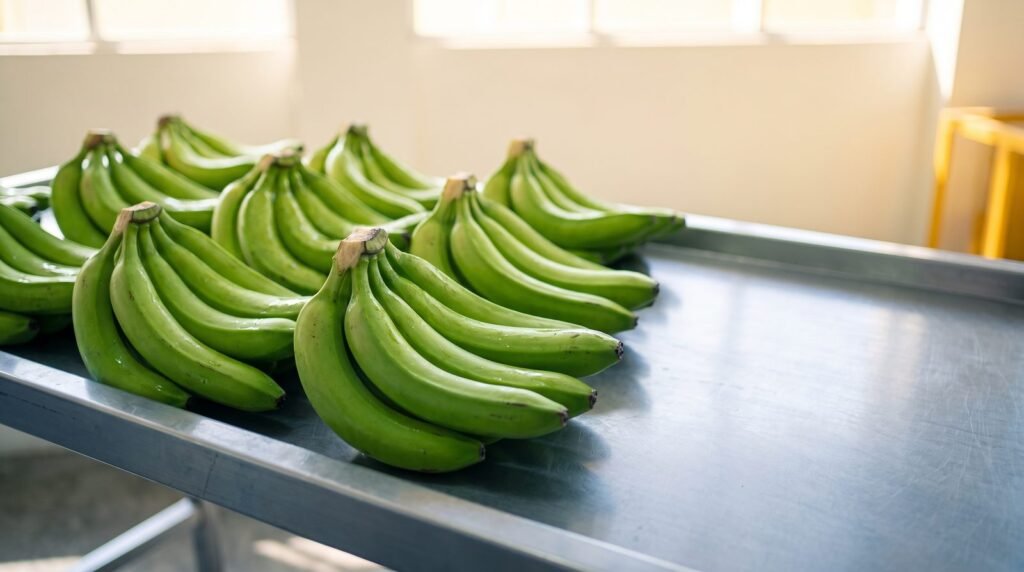
Short answer: no. Halal certification for fresh fruit is not a requirement in Malaysia — halal rules do not apply to fresh fruits and vegetables. A container of bananas does not need a halal certificate to enter the country or to be sold there.
The question gets asked constantly anyway, by importers and by suppliers, and the reasons behind it are worth understanding properly rather than dismissing. Getting this wrong in either direction costs money: suppliers chase certification they do not need, and buyers occasionally accept a price premium for a document that adds nothing.
Halal certification for fresh fruit: what Malaysian rules actually require
Malaysia’s halal framework divides imported food into three positions:
| Category | Halal certification |
|---|---|
| Meat and poultry, dairy, eggs, animal-based processed foods | Mandatory, from a body recognised by the Malaysian authority |
| Other processed food and beverages | Voluntary, but commercially significant |
| Fresh fruit and vegetables | Does not apply |
Fresh produce sits in the third row. A whole, unprocessed banana is not a product the halal certification regime is designed to assess, and no certificate is required for it at import or at retail.
Why the question keeps coming up
Three reasons, and all of them are legitimate.
- The market is genuinely halal-conscious. Around 60 % of Malaysia’s population is Muslim, and many food businesses operate on a policy of fully halal inputs across everything they buy. Asking is prudent, not paranoid.
- The line moves once you process. Fresh fruit is exempt; a fruit product is not necessarily. Once a banana is dried, fried, coated, made into a snack or packed with other ingredients, it has left the fresh-produce category and the voluntary-but-commercially-important position applies.
- Buyers ask suppliers, not regulators. A procurement officer who has been told “everything must be halal” will pass that instruction down the chain without the category distinction attached, because the distinction was never in the instruction.
What a Malaysian buyer should actually check
If you are importing fresh bananas, the useful compliance questions are entirely different ones, and they are the questions that can actually stop a container:
- A phytosanitary import permit from the Malaysian quarantine authority, obtained before the cargo arrives, plus active registration as a food importer.
- A phytosanitary certificate from the exporting country’s agriculture ministry, issued to your permit’s conditions rather than a generic one.
- Carton labelling meeting the grading, packaging and labelling rules: label size, lettering size, and the required particulars including grade standard, size, country of origin and package weight.
- The right certificate of origin form for your tariff preference.
None of these is a halal document, and all of them matter more to a fresh banana shipment than halal certification does.
If your programme is not only fresh fruit
The category boundary is the thing to watch. A supplier packing fresh Cavendish and a supplier packing dried banana chips are in two different regulatory positions, even if they are the same company and the same fruit.
So the question to ask is not “are you halal certified” but “which of the products I am buying fall outside fresh produce”. If the answer is none, certification is not part of the conversation. If the answer is some, then the voluntary-but-commercially-important position applies to those items, and it becomes a commercial decision about which retail doors open rather than a compliance requirement.
The exemption is about the product, not the supplier
This is the part that gets tangled. A halal certificate belongs to a product and a process, not to a company as a general badge. A supplier holding certification for a processed line does not thereby make its fresh bananas certified, and a supplier holding none is not thereby supplying something less compliant — because fresh fruit is outside the regime in either case.
So “is your company halal certified” is the wrong question for a fresh produce enquiry. It invites a yes or no that means nothing about the container you are buying. The question that carries information is which of the items on your order sit outside the fresh-produce category.
Where this shows up in the price
Two costs attach to getting this wrong, and they land on opposite sides of the table.
A supplier who believes fresh fruit needs certification may pursue it, and that cost has to go somewhere — usually into the quotation. A buyer who believes the same may accept a premium for a document that adds nothing to a container of whole bananas, or exclude a capable supplier for lacking one.
Neither party is acting in bad faith. Both are working from an instruction that lost its category distinction somewhere up the chain. Restoring the distinction is worth doing before the price is agreed rather than after.
A note on how to ask
This is a religious matter as well as a regulatory one, and it deserves precision rather than reassurance. A supplier who answers “yes of course, everything is halal” without distinguishing fresh produce from processed products is not demonstrating compliance — they are demonstrating that they have not read the rules. The accurate answer for fresh fruit is that the requirement does not apply, and a supplier who says so plainly is the one who has checked.
Working with Dragon Hub
Dragon Hub packs and exports Cavendish bananas to supermarket and wholesale buyers across Asia and the Middle East, Malaysia included. On fresh fruit we will tell you which requirements genuinely apply to your shipment and which do not, including when the honest answer is that a document you were asked to obtain is not needed. The full specification is on the Cavendish banana page, alongside the rest of our product range.
Frequently asked questions
Does fresh fruit need halal certification in Malaysia?
No. Halal requirements do not apply to fresh fruits and vegetables. Certification is mandatory for imported meat, poultry, dairy, eggs and animal-based processed foods, and voluntary for other processed food and beverages, but fresh produce sits outside the regime entirely.
Why do Malaysian buyers still ask suppliers about halal?
Because about 60 % of the population is Muslim and many food businesses run a policy of fully halal inputs across their whole purchasing, so the instruction is passed down the chain without the category distinction. Asking is reasonable; the accurate answer for fresh fruit is that the requirement does not apply.
When does a banana product need halal certification?
Once it stops being fresh produce. Dried, fried, coated or compounded banana products leave the fresh category and fall into the voluntary-but-commercially-important position, where certification is a commercial decision about retail access rather than an import requirement.
What documents does a fresh banana shipment into Malaysia actually need?
A MAQIS phytosanitary import permit obtained before arrival, active importer registration, a phytosanitary certificate issued to the permit’s conditions, compliant carton labelling under the grading and packaging rules, and the certificate of origin form your broker needs for tariff preference.
Sources
- Malaysia FAIRS country report: mandatory halal categories, voluntary status for other products, the fresh fruit and vegetable exception, and the share of the population that is Muslim
- FAMA grading, packaging and labelling regulations: the labelling particulars that do apply to imported fresh produce
