
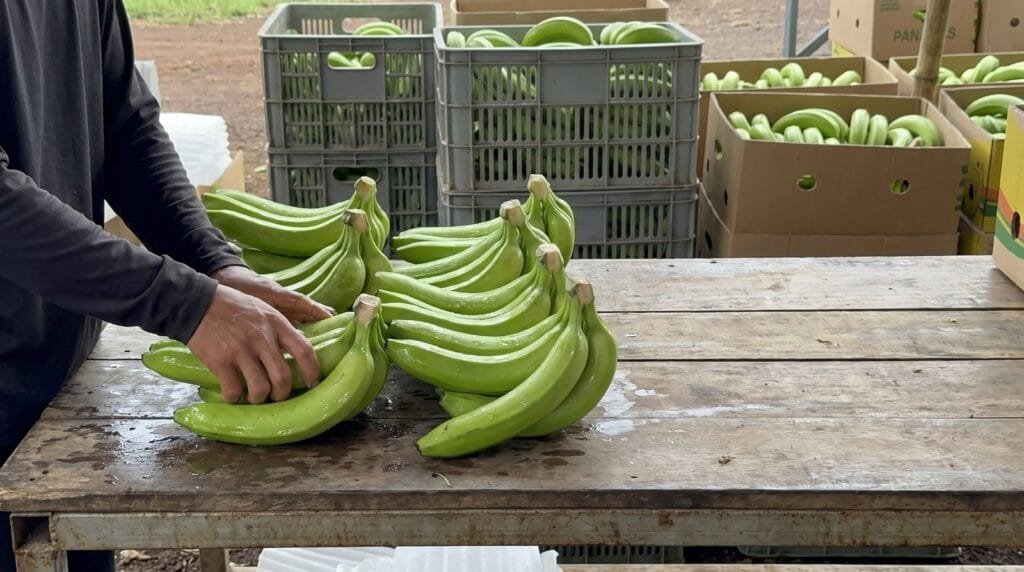
A purchase order that says “Class I, large size” has agreed almost nothing. Class I under which standard? Large measured how, and at which finger on the hand?
Cavendish banana grades and sizes are defined precisely in two places and nowhere else. Everything beyond those two documents is contract language between you and your supplier. This guide sets out what the standards actually say, how the measurements are taken, and which fields you need to fill in yourself.
Where Cavendish banana grades and sizes are actually defined
The European Union has a legal marketing standard for bananas, currently Commission Implementing Regulation (EU) No 1333/2011. Fruit sold in the EU must meet it. It fixes a minimum length of 14 cm and a minimum grade of 27 mm, and defines three classes.
The Codex Alimentarius standard for bananas, CXS 205-1997, is voluntary and used as a reference in international trade. Its figures match: minimum length 14.0 cm, minimum thickness 2.7 cm, same three classes.
Outside the EU there is no legal grading standard. China, Japan, Korea and the Gulf markets buy on contract specification, and most of those contracts borrow Codex language without saying so. That is where disputes start: two parties using the words “Class I” while measuring different things. What one exporter actually packs to is a separate question; ours is set out on our Cavendish banana page.
How length and grade are actually measured
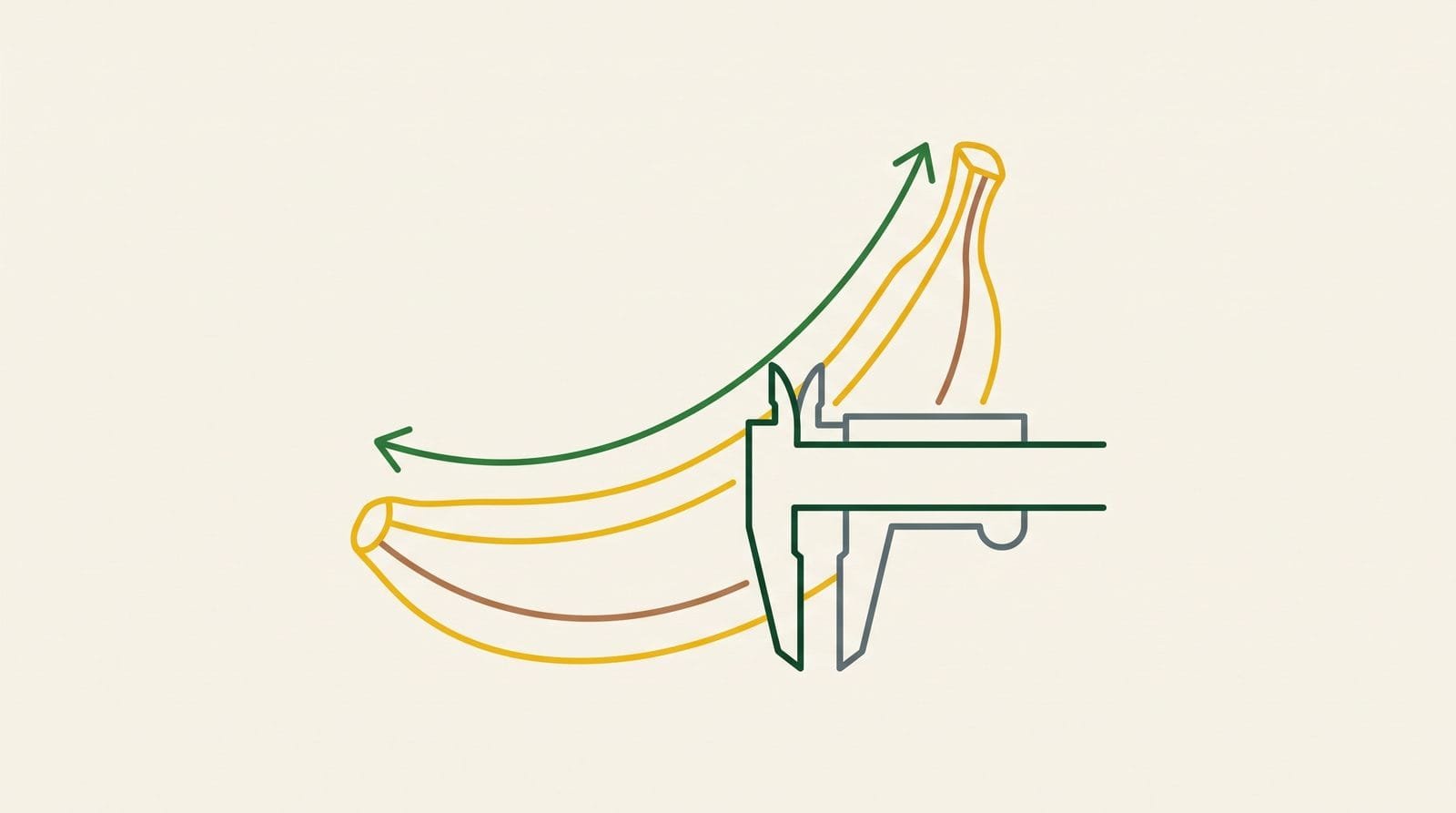
Both standards define the two measurements the same way, and both are more specific than most buyers realise.
Length
Measured in centimetres along the convex face — the outside of the curve — from the blossom end to the point where the peduncle joins the crown. Not the straight-line distance, and not including the crown.
Grade
The thickness in millimetres of a transverse section of the fruit, taken between the lateral faces and the middle, perpendicular to the long axis. In plain terms: the caliper reading across the fattest part of the finger.
Which finger you measure
This is the detail that settles arguments. Codex specifies the reference fruit: on a hand, the median finger of the outer row; on a cluster, the finger of the outer row next to the cut. If your contract does not name the reference finger, your inspector and the supplier’s inspector will measure different fruit and both will be right.
The three classes and what each one allows
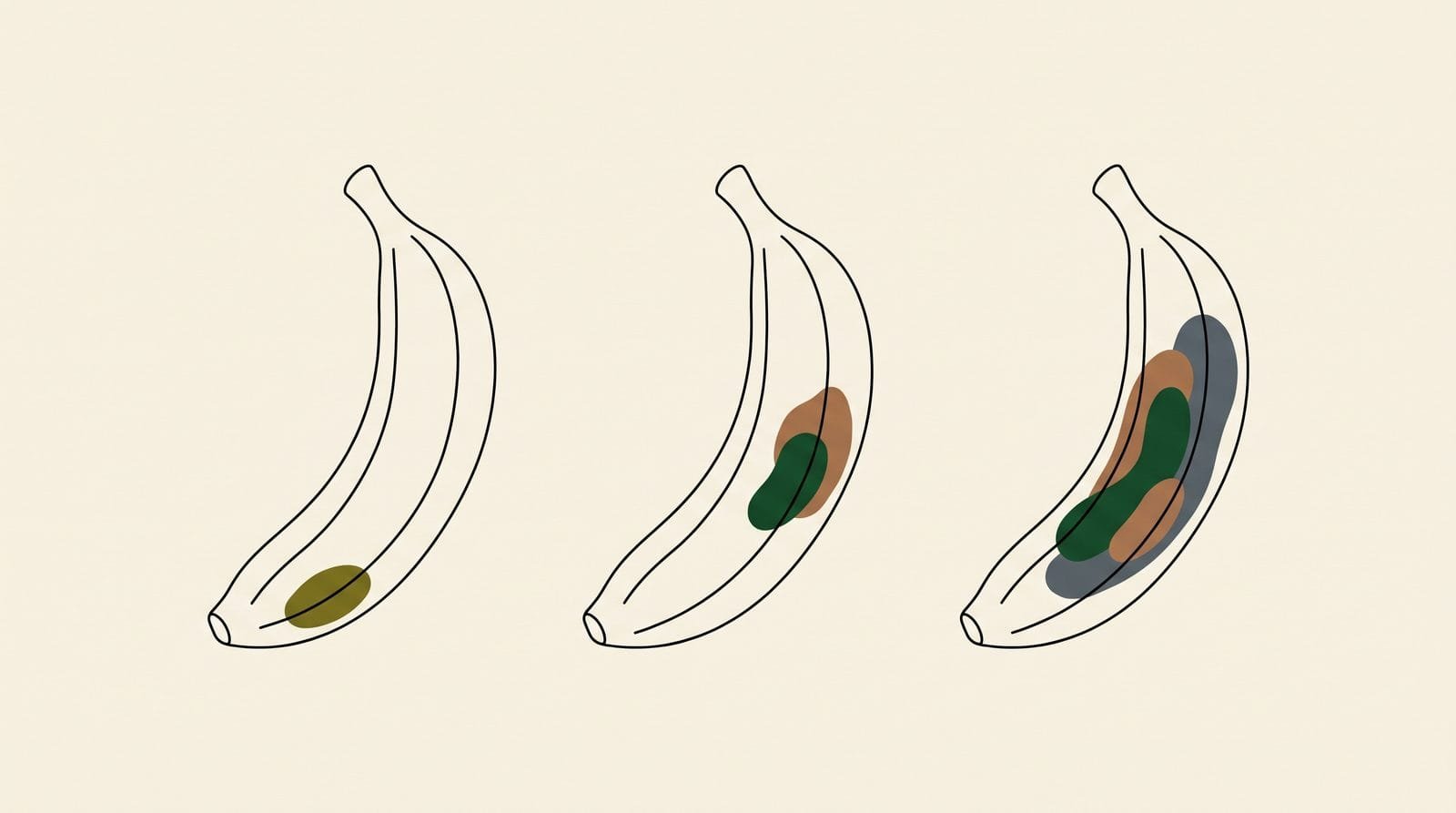
Classes are defined by skin defects, expressed as an area per finger. The flesh must be unaffected in every class.
- Extra — superficial blemishes only, not more than 1 cm² of the total surface of the finger
- Class I — slight skin defects from rubbing or handling, not more than 2 cm² per finger
- Class II — skin defects from scraping, scabs, rubbing or blemishes, not more than 4 cm² per finger
Each class carries a tolerance for fruit that misses it: 5% by number or weight for Extra, 10% for Class I and Class II. A separate 10% size tolerance applies in all classes for fruit outside the stated range.
Two things follow from this. First, a shipment can be correctly declared Class I and still contain a tenth of fruit that is only Class II — that is the standard working as designed, not a supplier cheating. Second, 2 cm² is a small area, roughly a fingernail. Agree how it will be assessed on arrival, and by whom, before you sign.
Hands, clusters and the crown
Both standards require bananas to be presented in hands or clusters of at least four fingers. Single fingers are permitted but are a different product commercially, usually for processing rather than retail.
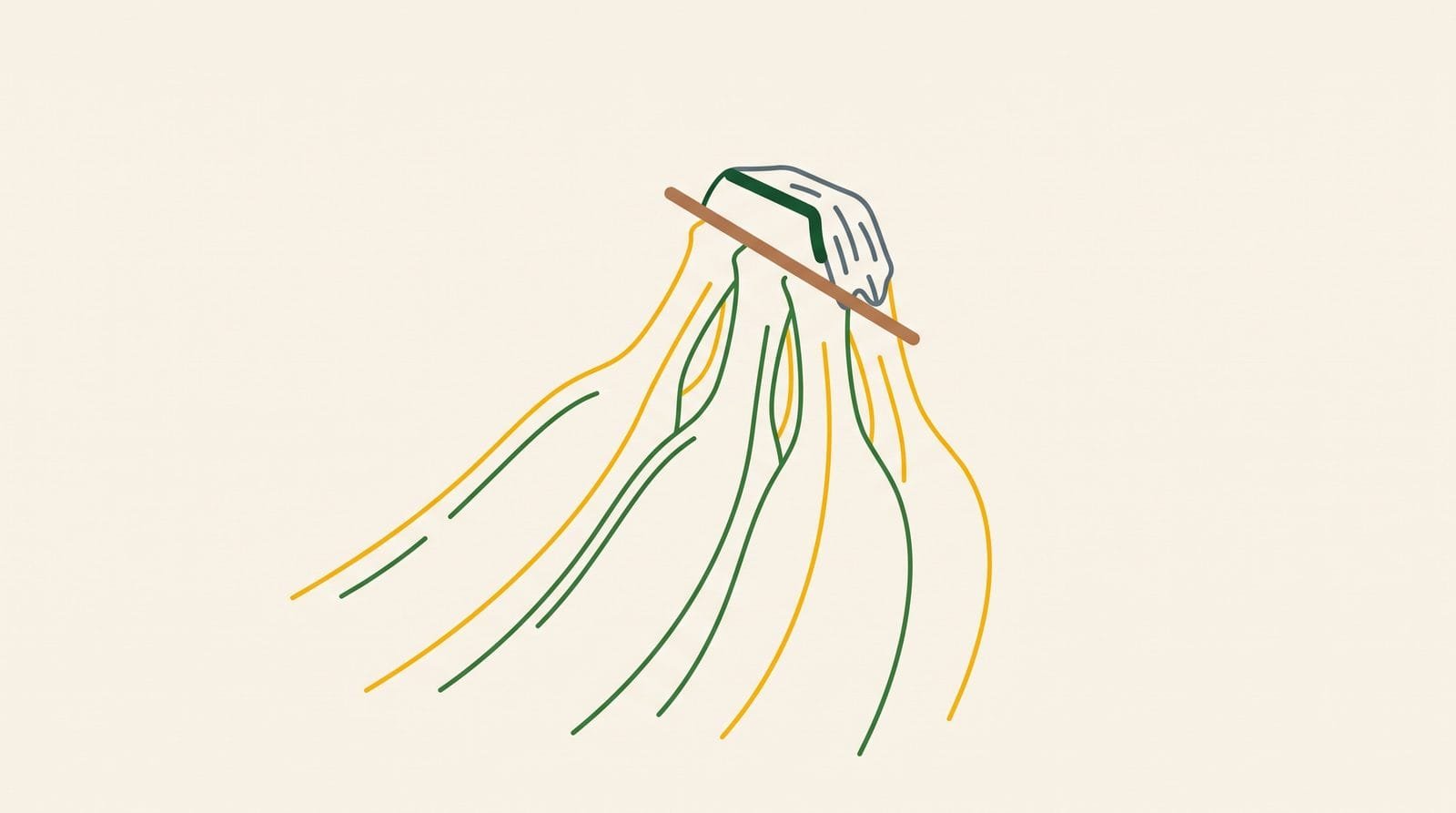
The crown matters more than its size suggests. The standards require a sufficient portion of crown, of normal colour, sound and free from fungal contamination, and cut cleanly — not bevelled or torn, with no stalk fragments. A ragged crown is where crown rot begins, and crown rot is the most common quality claim on long voyages.
Cluster size is where supermarket programmes diverge sharply from wholesale. Retail packs are often specified at a fixed finger count per cluster so that shelf packs weigh consistently; wholesale buyers usually accept a range. Say which you are.
What your specification still has to say
The standards cover the floor, not your programme. These fields have no default value and no standard answer — if you leave them blank, the supplier decides for you:
- Minimum and maximum finger length, in centimetres, and the reference finger
- Minimum and maximum grade in millimetres — state millimetres, since some trade documents still quote thirty-seconds of an inch
- Class, and the standard that class refers to (EU 1333/2011 or Codex CXS 205)
- Fingers per cluster, or hands, and whether mixed cluster sizes are acceptable
- Maturity at loading, expressed as fullness, matched to your transit time
- How defect area is assessed on arrival, by whom, and what happens if the parties disagree
Send that list to three suppliers and the quotes become comparable for the first time. Send “Class I, large” and you will get three different products at three prices.
Working with Dragon Hub
Dragon Hub processes, packs and exports Cavendish bananas from a packing facility in Dong Nai province, to supermarket and wholesale buyers in China, Malaysia, Singapore and the Middle East. We pack to the buyer’s stated grade and length range rather than to a house standard, because the same fruit sizes differently for a Chinese wholesale market and a Singapore retail programme. Cau bananas, seedless limes, coconuts and pomelo sit alongside them in the product range.
Send us the six fields above and we will tell you what we can pack to them, what we would push back on, and what it costs against a stated Incoterm. If a combination is not realistic from this origin at your target price, we would rather say so before the container than after it.
Frequently asked questions
What is the minimum size for export Cavendish bananas?
Under both the EU standard and Codex, 14 cm in length measured along the convex face and 27 mm in grade. Fruit below either figure fails the standard regardless of class. Most buyer programmes set their own minimum above the legal floor.
What is the difference between Class I and Class II bananas?
Skin defect area per finger: 2 cm² for Class I, 4 cm² for Class II. Both allow a 10% tolerance of fruit falling into the class below. Flesh must be unaffected in both. Class II is not damaged fruit, it is cosmetically marked fruit.
How is banana grade measured?
As the thickness in millimetres of a transverse section between the lateral faces and the middle, perpendicular to the long axis. On a hand the reference is the median finger of the outer row; on a cluster it is the outer-row finger next to the cut.
Do China, Japan and Korea use the EU banana standard?
No. Only the EU standard is law, and only inside the EU. Asian markets buy on contract terms, most of which borrow Codex definitions. Name the standard in your contract rather than assuming your supplier shares your definition.
How many fingers should a banana cluster have?
At least four under both standards. Retail programmes usually fix an exact count per cluster for consistent pack weight; wholesale buyers typically accept a range. State which applies to your order.
Sources
- Commission Implementing Regulation (EU) No 1333/2011, Annex I — marketing standards for bananas
- Codex Alimentarius CXS 205-1997 — Standard for Bananas
