
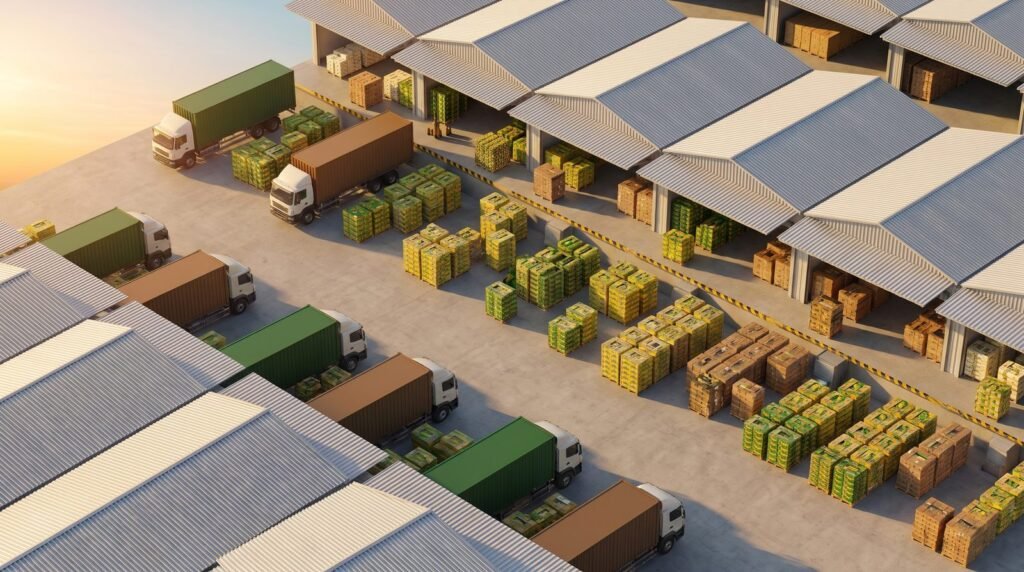
A reefer of Vietnamese bananas can clear Jebel Ali in two days and still have nowhere to go. Almost every wholesale box of produce in the emirate changes hands in one place, and the Al Aweer market Dubai fruit buyers work from is closed to you as a foreign exporter: you cannot back a container up to a stall and sell it yourself.
That is not a technicality, and it is not a problem a freight forwarder solves. It is the question Dragon Hub gets asked most often by first-time Gulf shippers. Selling on the wholesale floor needs a UAE trade licence and an allocated stall, so your first commercial decision is not price—it is which kind of partner takes the goods. An importer who buys the container outright, or an agent who sells it on your behalf and remits what is left. Those two structures put the risk in opposite places, and the difference is where exporters lose money on a first shipment.
Al Aweer in Figures That Have a Source Behind Them
Dubai’s wholesale produce trade is concentrated in the Dubai Central Fruit and Vegetable Market at Al Aweer, on the edge of Ras Al Khor. Dubai Municipality runs it, and it has traded on that site since 3 July 2004.
For scale, the most defensible number comes from the market’s own management. In 2015 the head of the market, Faisal Abdullah Mohamad, told Khaleej Times that the site covers over one square kilometre and receives more than 600 trucks a day, each carrying 22 to 26 tonnes. That is roughly 13,000 to 15,000 tonnes arriving daily, from a named official rather than a supplier brochure.
The layout matters, because it tells you who your goods have to reach:
- A wholesale section of 248 outlets spread across seven blocks—this is where traders, importers and re-exporters operate.
- A separate air-conditioned retail section with over 150 outlets, selling vegetables, meat and fish to the public.
- Trading hours of roughly 06:00 to 13:30 and 16:00 to 23:00 daily, with the wholesale floor busiest early, when the night’s arrivals are priced.
One warning about research. You will also read that the market moves 7,000 tonnes a day, that over 80 per cent of Dubai’s fresh produce passes through it, and that it covers 6,110 hectares. Those circulate on supplier blogs without a municipal source, and the last one cannot be right: 6,110 hectares is sixty times “over one square kilometre”. Build a volume forecast on the truck count instead, which has a name attached to it.
Who Can Legally Sell in the Al Aweer Market Dubai Fruit Trade
The short answer: a company holding a UAE commercial licence that explicitly covers fresh fruit and vegetable trading, with an allocated stall in the wholesale blocks. An exporter sitting in Ho Chi Minh City has neither, and no amount of volume changes that.
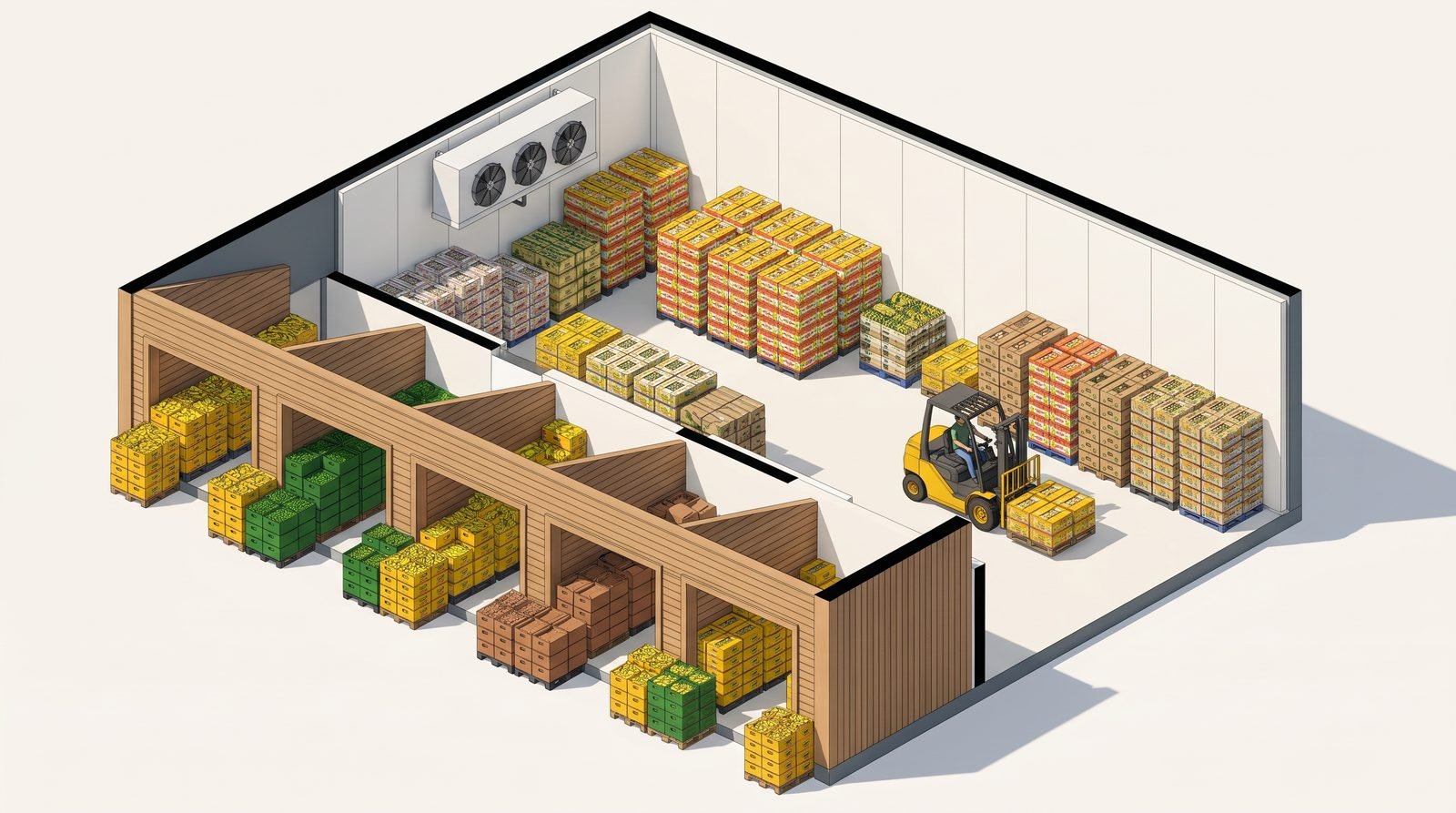
So the container has to pass into the hands of a licensed UAE party at some point. There are three kinds of counterparty on that floor, and only two of them are buyers:
- Direct importers hold the licence, rent cold storage, buy full container loads and take title to the goods on delivery. You are selling to a company.
- Commission agents sell your fruit on the floor for a percentage. The goods remain your property until they are sold. You are not selling—you are consigning.
- Customs clearing agents handle port clearance, inspection and delivery to the stall. They buy nothing and carry no price risk. Useful, but not a buyer—confusing the two is a common first mistake.
The same logic applies at origin as at destination. We have written about the trade-offs of selling through an intermediary rather than to the end buyer in buying bananas direct from Vietnam or through a middleman.
Route One: Sell the Container to a Direct Importer
Here the price is agreed before the vessel sails, title passes on delivery, and you invoice a named company with a licence number. Your exposure becomes credit risk on one buyer instead of market risk on a perishable.
The trade-off is the unit price. An importer who takes the whole container and carries the price risk pays less per carton than the floor price, and that gap is the cost of certainty: a bad week on the market becomes the importer’s problem, not yours.
Because you are selling against a written specification rather than against whatever the fruit looks like on arrival, that specification has to be exact: finger length and grade, cartons per pallet, pulp temperature at loading, colour stage on departure. Our specification and terms guide for UAE buyers sets out the fields worth pinning down before a first order.
Three things to ask any importer for before you ship:
- A copy of the trade licence showing fresh fruit and vegetable trading as a listed activity, not just “general trading”.
- The stall or block number and the cold store they actually use—a buyer with no physical position on the floor is reselling your risk to someone you cannot see.
- Bank details in the same company name as the licence—a mismatch here is the cheapest fraud check available.
Route Two: Consign to a Commission Agent
Commission on the Al Aweer floor is commonly quoted at 5 to 10 per cent of the sale value by trade sources, which sounds modest against the price gap in route one. The rate is not the point, though. The structure is.
In a consignment arrangement the fruit stays yours until the agent sells it. The US International Trade Administration ranks consignment as the highest-risk payment method available to an exporter, for a blunt reason: the exporter is not guaranteed any payment at all, and the inventory is sitting in a foreign country in someone else’s possession.
For bananas that risk compounds. If the market softens for ten days, the fruit does not wait—it ripens. You carry the price risk and the biological clock together, and the account sale explaining what happened arrives after the fruit has gone. From Ho Chi Minh City you cannot audit the floor price the agent reports.
Consignment can still work, but only with guardrails: a verified agent, a trial volume rather than a full programme, cargo insurance that covers goods held by a third party, and lot-by-lot written reporting rather than one lump settlement.
Payment Terms That Survive a First Container
The payment ladder for this market is well established, and skipping a rung is what first-time exporters regret.
- First shipment: letter of credit, or 30 to 50 per cent advance with the balance against documents. Nothing on open account.
- After three to five clean orders: move to short credit. Fifteen to thirty days is the normal band quoted for this market, alongside cash on delivery and letters of credit.
- Treat as a warning: a request for 60-day credit on a first order. On fruit that has weeks of life, two months of credit is not a payment term, it is an unsecured loan.
A banana programme runs on days, not months—see how many days of green life you actually have. A quality dispute that takes three weeks to resolve is a dispute about fruit that no longer exists, which is why the paperwork and the inspection regime have to be agreed before the container leaves, not after it lands.
What Dragon Hub Prepares for a Gulf Buyer
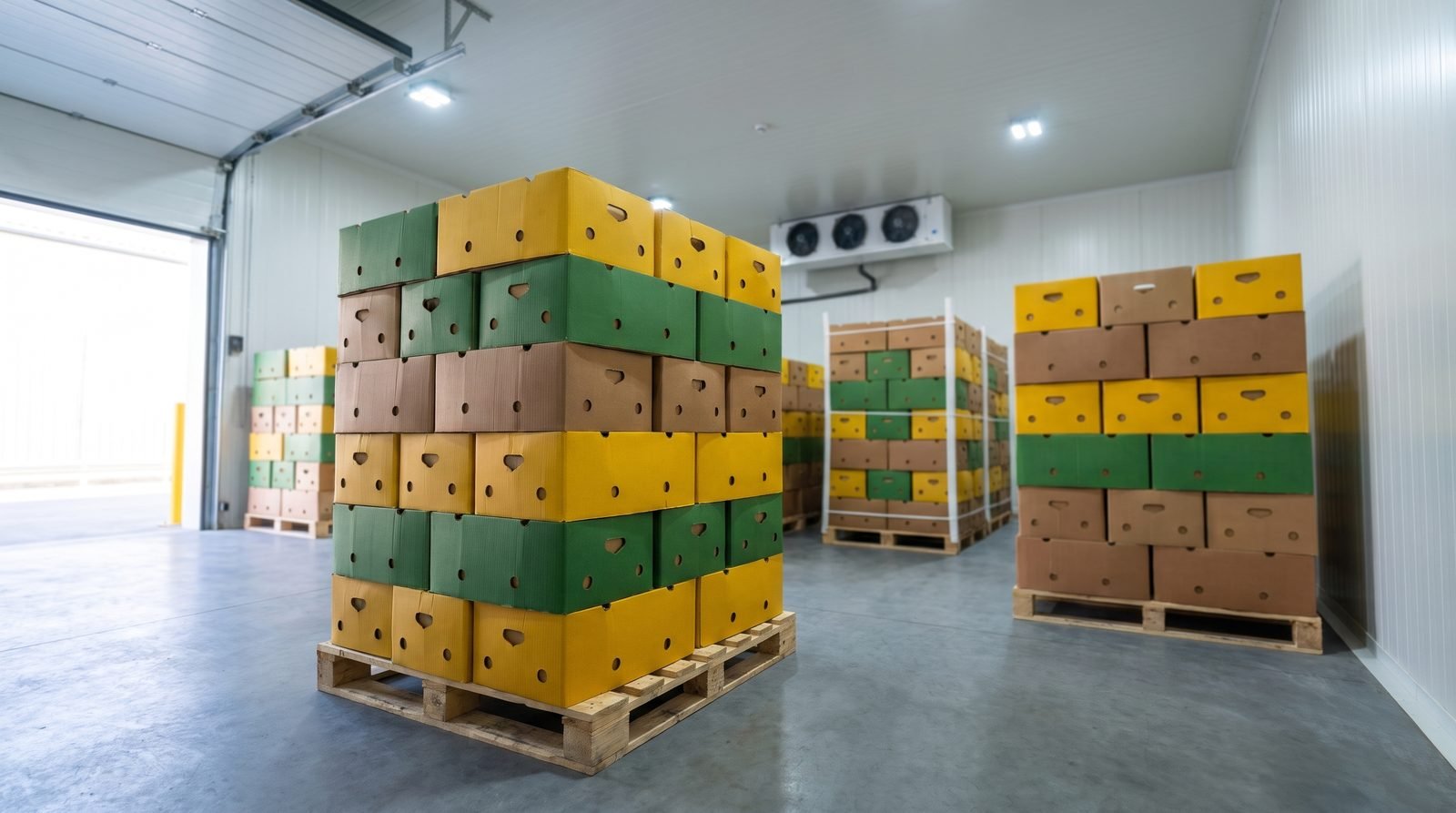
We pack to the buyer’s carton and size specification rather than to a house standard, pre-cool before loading, and record pulp temperature and colour stage per lot. For an importer or an agent working the Al Aweer floor, that record is what makes an arrival claim arguable instead of a write-off.
If you are pricing a Gulf programme, send us the carton specification, the grade you sell to and the arrival window you need, and we will come back with a packing plan and a loading schedule against it. Our current range is listed under products.
Frequently Asked Questions
Can a foreign exporter rent a stall in Al Aweer?
Not as a foreign entity. Wholesale trading on the floor requires a UAE commercial licence covering fresh fruit and vegetable trading plus an allocated stall. Exporters who want their own position set up a licensed UAE company to hold both—a decision with capital and compliance consequences well beyond one container.
Is a commission agent cheaper than selling to an importer?
On paper yes, because 5 to 10 per cent commission looks smaller than the discount an importer takes for buying outright. In practice the comparison is not like for like: with an agent you keep the price risk, the ripening risk and the risk of not being paid. The importer’s discount is the price of transferring all three.
How do I check that a buyer is real before shipping?
Ask for the trade licence showing the fruit and vegetable activity, confirm the stall or cold store they operate from, and check that the bank account name matches the licensed company exactly. Then start with a trial container on secured terms. A buyer who refuses any of those steps has told you what you need to know.
Who pays if the fruit arrives overripe?
It depends entirely on which route you chose. Selling to an importer under an agreed specification, liability follows the contract and the Incoterm, and an inspection on arrival decides it. Under consignment the goods were still yours, so a ripening loss is yours by default unless the agent’s negligence can be shown.
