
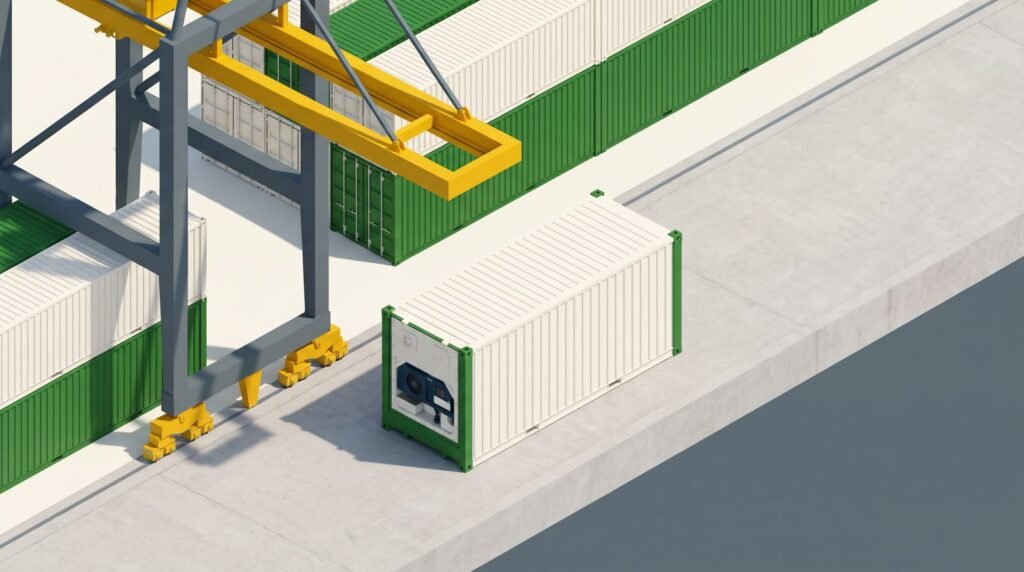
Every other question about a Gulf banana programme is downstream of one number: how many days the fruit spends at sea. Shipping bananas Vietnam to Jebel Ali is not a long haul by container standards, but it is long relative to what a green banana can tolerate, and that is a different measurement entirely.
The honest version of the answer is a range, not a figure, because the routing decides it, and it is the first thing Dragon Hub checks before quoting a Gulf programme. Below are the transit times published by freight sources, set against what postharvest literature says a Cavendish banana can actually survive. The gap between those two sets of numbers is the whole commercial problem.
How Long the Voyage Takes
Indicative figures from logistics providers on this lane, all of them planning ranges rather than guarantees:
- Direct FCL, Cai Mep to Jebel Ali: about 20 to 30 days, with weekly or fortnightly sailings offered by several carriers.
- Via a transshipment hub: roughly two to four weeks, with the note that hub choice strongly affects the total. Singapore and Port Klang are the hubs named for feeder services out of southern Vietnam.
- Feeder routing instead of direct: add three to five days over the direct figure.
- LCL consolidation from Cat Lai or Cai Mep: 22 to 35 days, with departures roughly twice weekly.
- Red Sea re-routing via the Cape of Good Hope: add seven to fourteen days.
Two things follow. First, a direct service out of Cai Mep does exist, which is worth knowing because the lane is often described as transshipment-only. Second, the spread between a good direct booking and a feeder routing that misses its connection is large enough to decide whether the cargo arrives saleable.
Treat all of the above as a planning envelope. Before a first container, pull the actual port-to-port schedule from the carrier for your sailing week and read the rotation, not the headline number. A quoted “25 days” that includes four days idle at a hub is not the same cargo risk as 25 days under reefer power on one vessel.
What Shipping Bananas Vietnam to Jebel Ali Costs You in Green Life
Green life is the period a harvested banana stays firm and green before it begins to ripen on its own. It is the budget the voyage spends.
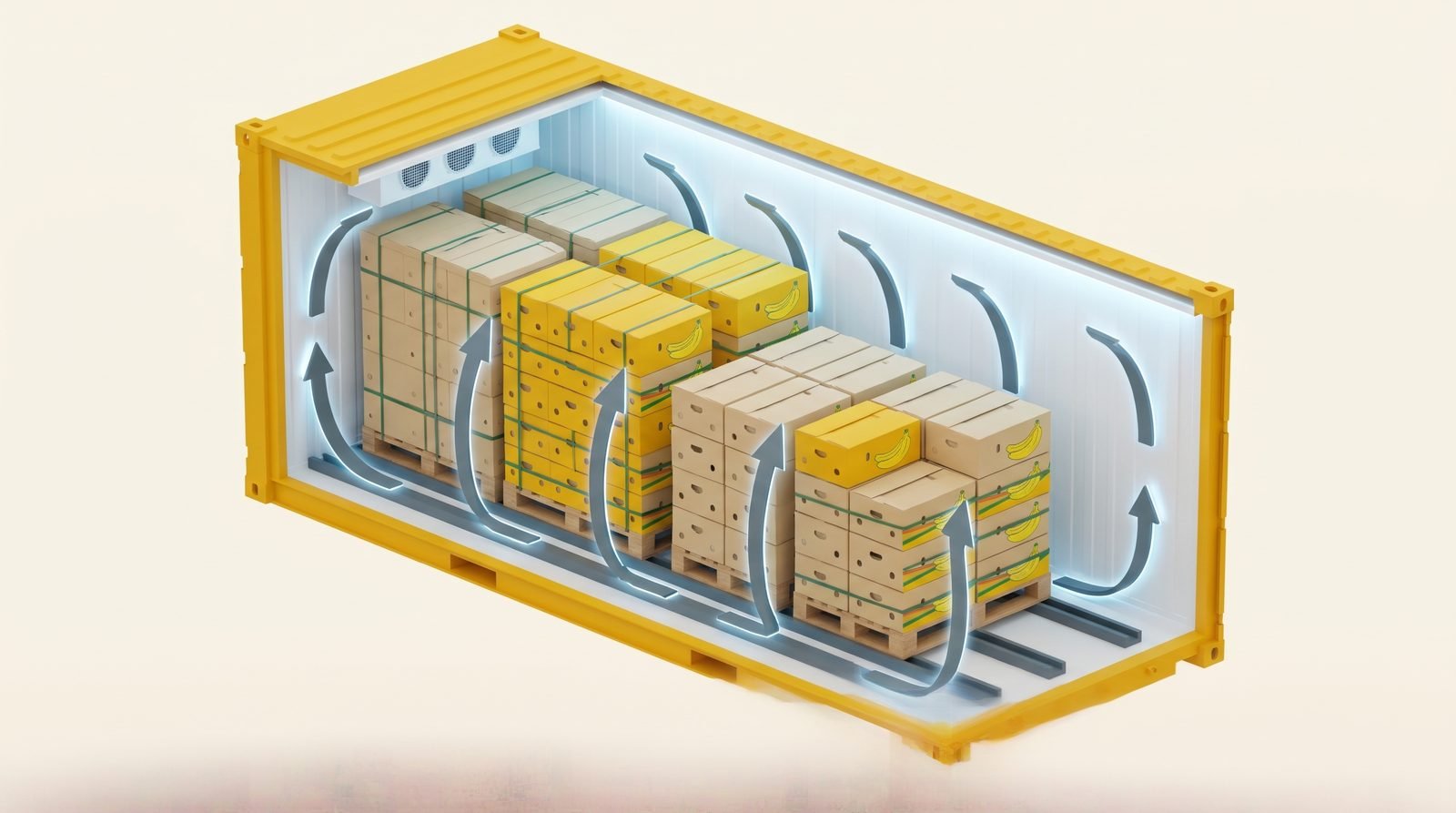
The carriage figures are well established. Cavendish bananas are carried at about 13.3°C, and the Cargo Handbook puts storage life at roughly four weeks: approximately 28 days in regular packaging at 13.2°C, and up to 40 days in vacuum-type packaging that lifts carbon dioxide to around 5 per cent and lowers oxygen to about 2 per cent. Recommended humidity is 85 to 95 per cent, with container ventilation around 25 cubic metres per hour.
Now set that against the transit range. A 20-day direct voyage leaves a working margin for clearance, ripening and distribution. A 28-day voyage spends the entire published shelf life at sea and leaves nothing for anything that happens after the vessel berths. A feeder routing that adds five days to that is already past the number.
This is not an argument against the lane. It is an argument that on this lane the packaging specification and the departure colour stage are commercial terms, not technical details. A buyer who wants 28 days of transit and ordinary cartons is asking for two things that do not fit together, and our own breakdown of how many days of green life you actually have explains why the arithmetic does not bend.
Why India Clears Jebel Ali Inside a Week
The comparison every Vietnamese exporter eventually runs into is India. Freight guidance published in September 2026 puts direct services from Nhava Sheva and Mundra to Jebel Ali at roughly four to seven days port to port, with rate aggregators showing figures in the same band or shorter.
That is not a quality advantage, and it is not a cost advantage on the fruit itself. It is geography. An Indian shipper working on a four-to-seven-day voyage can send fruit at a later colour stage, absorb a missed connection, and still land green. A Vietnamese shipper on a twenty-day voyage has to design the whole lot around the clock.
Being explicit about this with a Gulf buyer is more persuasive than talking around it. The buyer already knows the transit times. What they do not know is whether you have planned for them.
Four Things That Decide Whether the Fruit Lands Green
- Time from harvest to cooling. Cooling should begin quickly after cutting—guidance points to within 24 hours. Every hour of field heat is green life spent before the container is even sealed.
- Pulp temperature at loading. It should not exceed ambient by more than 2°C, and in no case should exceed 30°C. A warm load means the reefer spends the first days pulling heat out of the fruit instead of holding it.
- Set point discipline for the whole voyage. Below roughly 13°C the fruit takes chilling injury, and the damage can take 18 to 24 hours to become visible—so it is usually discovered at the destination, not on the quay. We set out the actual settings in reefer container settings for bananas.
- Days between berthing and the ripening room. Transit is only part of the budget. Clearance at the destination is the other part, and it is the part you do not control—see Jebel Ali customs clearance for fresh fruit.
Put the Routing in the Contract
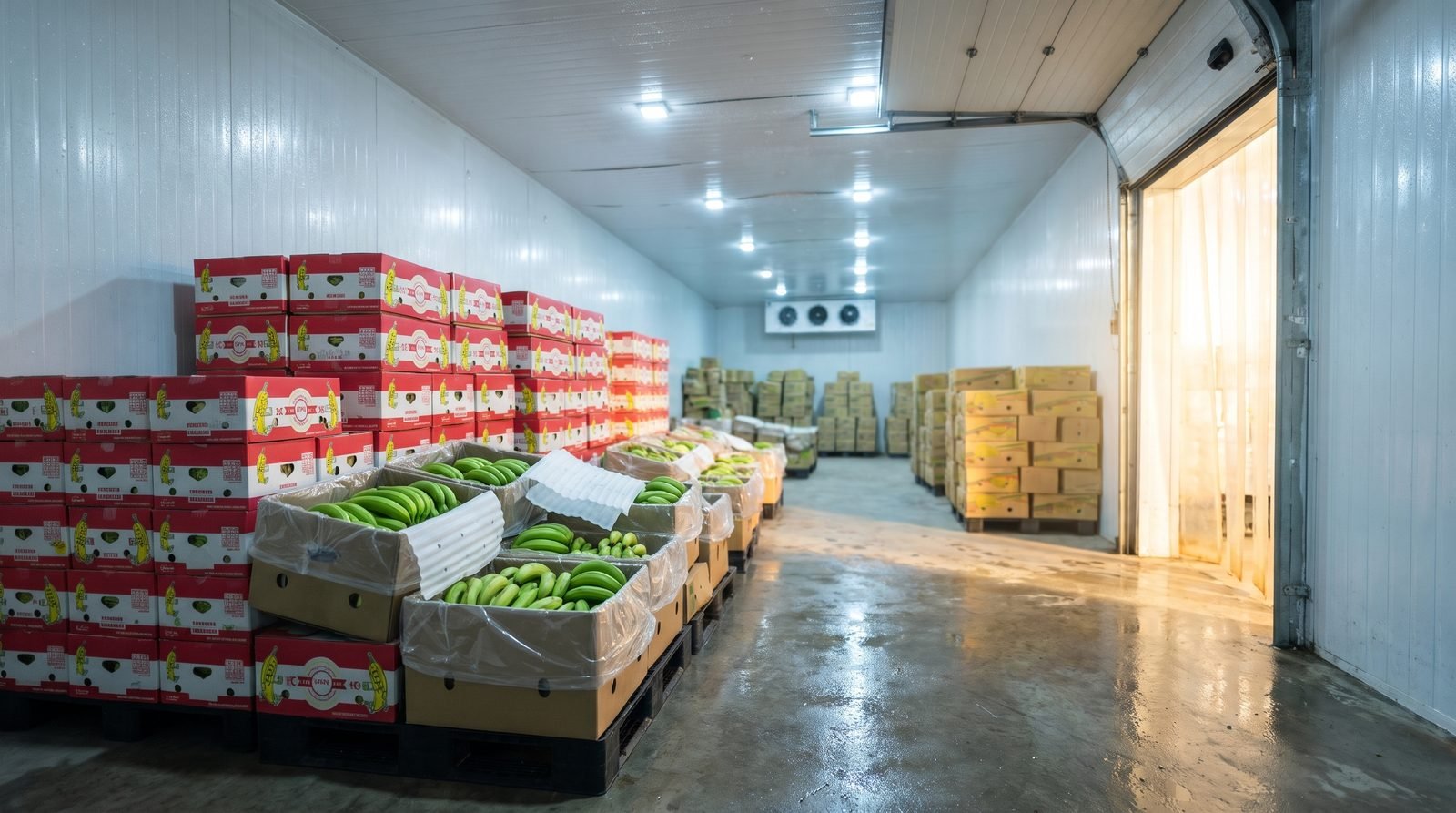
On a lane this long, “we will ship by sea” is not a specification. Three clauses are worth arguing about before the first order:
- Named service and maximum transit. Agree the routing and a ceiling in days, with the consequence of exceeding it written down rather than left to goodwill.
- Transshipment disclosure. If the booking moves to a feeder routing, you need to know before the vessel sails, because the colour stage at packing should change with it.
- Who carries a reefer failure. This follows the Incoterm and the insurance, not the relationship, and it is better settled while everyone is calm.
The second clause is the one most often missing. A carrier switching a booking to a hub routing is a normal commercial event; discovering it from the bill of lading after loading is not.
How Dragon Hub Plans a Long-Haul Banana Lot
For a voyage in this range we work backwards from the arrival date: cutting scheduled against the sailing rather than against the farm’s convenience, pre-cooling before loading, pulp temperature and colour stage recorded per pallet, and packaging chosen for the transit time actually booked rather than a default carton.
If you are pricing a Gulf programme, send us the arrival window and the colour stage you want on delivery and we will come back with a cutting and loading schedule built around it. Current lines are listed under bananas.
Frequently Asked Questions
How many days is it from Vietnam to Jebel Ali by sea?
Freight sources put direct container services from Cai Mep at roughly 20 to 30 days, and routings through a transshipment hub at about two to four weeks, with feeder legs adding three to five days. These are planning ranges. Confirm the port-to-port figure with the carrier for your specific sailing week before committing to an arrival date.
Is there a direct service, or is everything transshipped?
Both exist. Several carriers are listed as running direct sailings from Cai Mep to Jebel Ali on a weekly or fortnightly basis, while feeder services route through hubs such as Singapore or Port Klang. Direct is usually faster; a hub routing can offer better frequency or space, at the cost of connection risk.
Can bananas survive a 28-day voyage?
It is at the edge. Published figures give Cavendish fruit about 28 days at 13.2°C in regular packaging and up to 40 days in vacuum-type packs. A voyage that uses the whole 28 days leaves no margin for clearance or ripening, so a transit that long needs packaging and a departure colour stage chosen for it.
Does the Red Sea situation affect this route?
It can. Services re-routed around the Cape of Good Hope add roughly seven to fourteen days, which on a banana lane is not an inconvenience but a different cargo decision. Ask the carrier which routing your booking uses, and re-check it close to the sailing date.
What should I ask a supplier about transit?
Ask for the booked service and expected port-to-port days, the colour stage the fruit will be cut and packed at for that transit, pulp temperature at loading, and whether vacuum-type packaging is offered. A supplier who cannot answer the second and third questions has not planned for the distance.
