
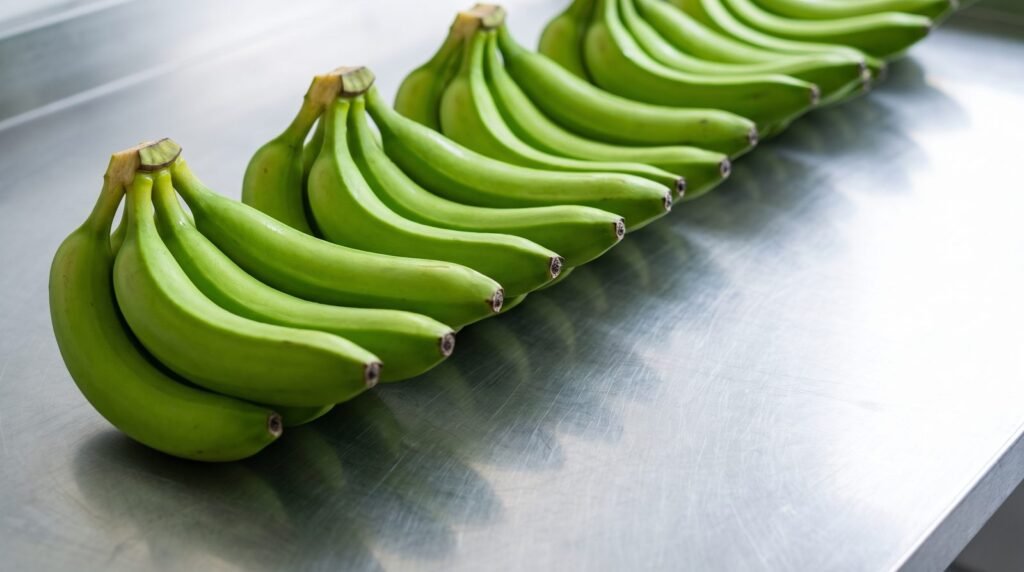
A buyer holding three quotations — one for a Chinese port, one for Port Klang, one for Singapore — is not looking at three prices for the same thing. The gap between them is wide and it is stable, which is the clue that it comes from structure rather than from negotiation. This is why singapore banana prices are higher than the prices a few hundred kilometres away, and what that means when the three numbers land on the same desk.
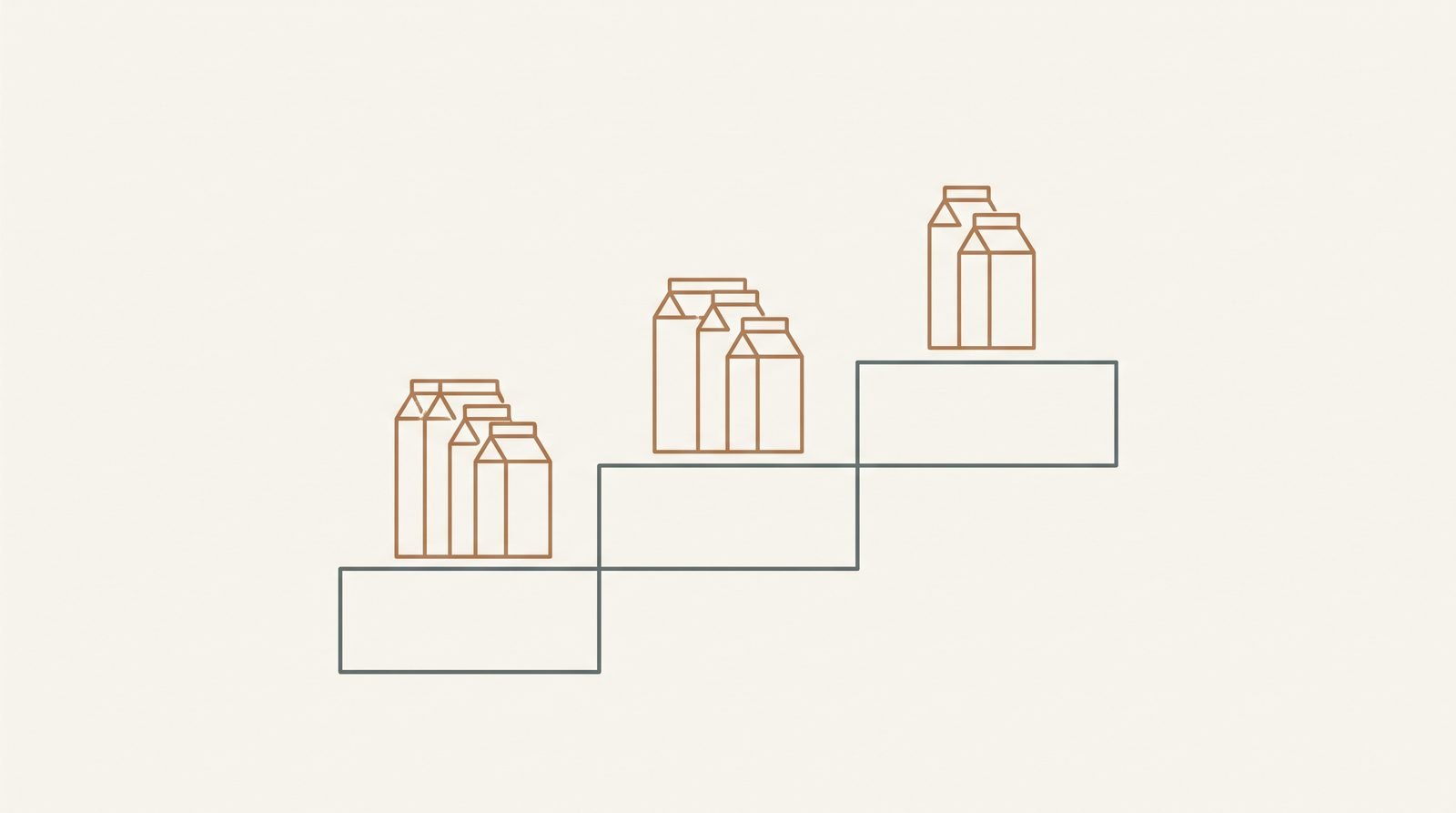
Start with the rungs, each one dated, because mixing years is how this comparison usually goes wrong.
Three markets, three unit values
Unit values below are import value divided by import volume — what the whole trade averaged, not what any one container fetched.
- China, January to February 2024. Imports averaged 474.5 US dollars a tonne across all origins, about 0.47 a kilo. Vietnamese fruit specifically came in at 405.4 dollars a tonne, roughly 0.41 a kilo — the lowest of any supplier to that market, while Vietnam held 51.5 per cent of import volume
- Malaysia, full year 2024. 30,616,797 kilos imported for 15,282,545 dollars, an implied 0.50 a kilo across all origins. Vietnamese fruit made up about 70 per cent of that volume at an implied 0.52 a kilo
- Singapore, full year 2023. 48,097,065 kilos for 31,435,927 dollars, an implied 0.65 a kilo across all origins
Two honest caveats. The three figures are not from the same year, so the ladder shows a standing pattern rather than a snapshot. And the Singapore figure is an all-origin average in a market where the Philippines and Malaysia are the two largest suppliers, so it is not a Vietnam-origin price the way the other two rungs are.
Sampled 2026 transactions show how wide the spread inside each market is: five sampled Singapore import records in August 2026 ran from 0.54 to 0.81 a kilo, and five Malaysian records in February 2026 from 0.42 to 1.22. Individual containers overlap heavily. It is the averages that separate.
Why singapore banana prices are higher: four structural reasons
The supplier mix is different
Singapore buys most of its bananas from the Philippines, where the export trade is built around branded programmes grown to a retail specification. Malaysia’s imports are dominated by Vietnamese fruit, much of it moving on short lead times into wholesale and wet-market channels alongside domestic production. Two different products, priced differently, both correctly.
Malaysia also grows bananas itself, which puts a ceiling over the imported price that a city-state does not have. That dynamic is set out in why Malaysia imports bananas despite growing its own.
The quality tolerance is narrower
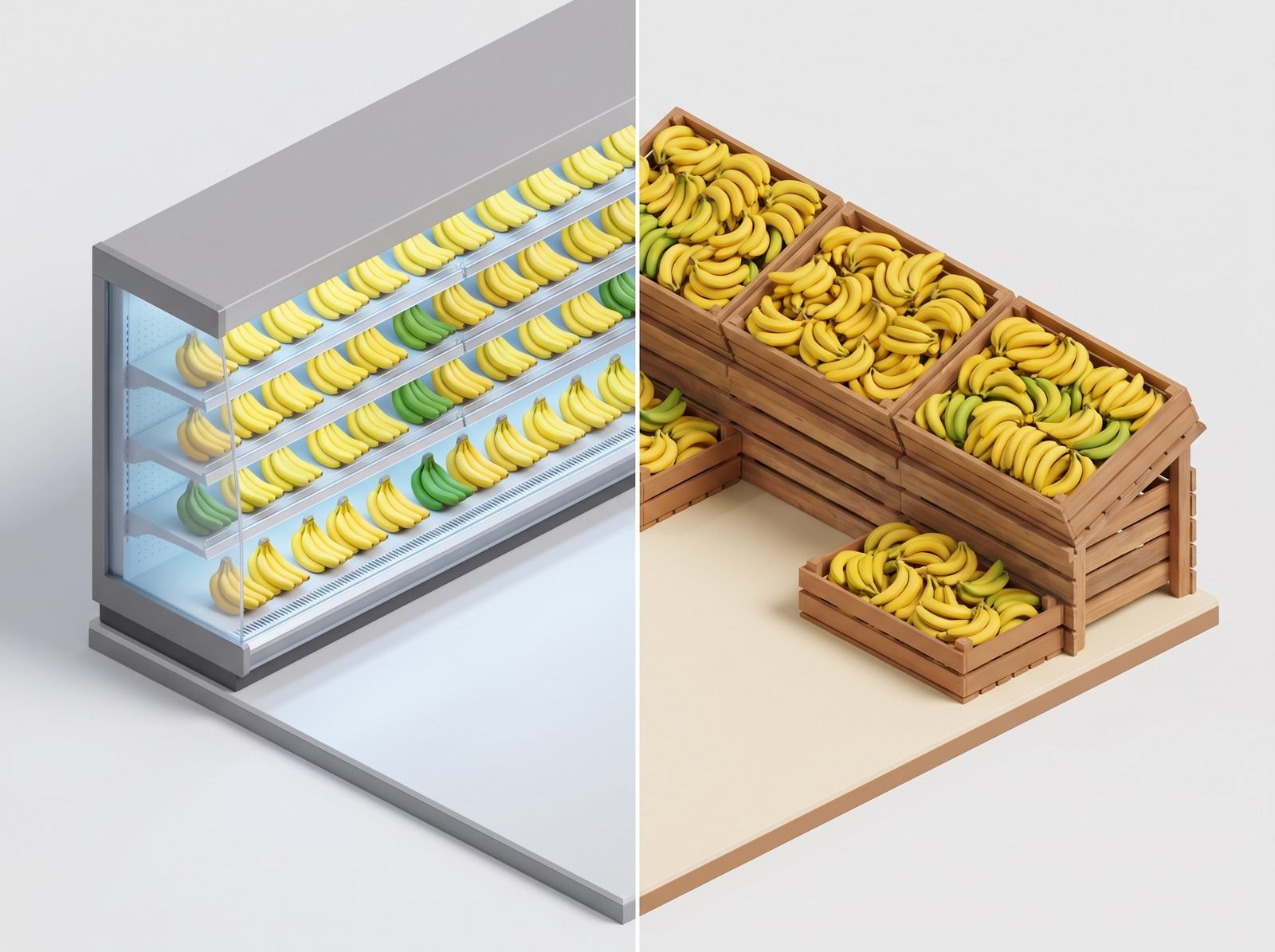
Nearly all of Singapore’s banana volume moves through organised retail, which means fixed size ranges, a defined colour stage on delivery, and a short defect list with tight tolerances. Fruit that fails those limits has nowhere cheap to go in a market that small.
So the supplier is not pricing the fruit. The supplier is pricing the proportion of the harvest that survives the specification, plus the cost of grading hard enough to be sure. A wholesale market that will take a wider size range buys the same fruit for less because it accepts more of it.
The market is small, so the order sizes are small
Singapore’s entire banana import trade was worth about 31 million US dollars in 2023. A programme there is measured in containers a month where a Chinese programme is measured in containers a week.
Everything that does not scale with volume gets spread over fewer kilos: the grading labour, the documentation per consignment, the cost of holding spare fruit against a short delivery. Small, exacting and frequent is the most expensive shape an order can take.
Destination costs are carried in the landed price
Ripening rooms, cold storage and distribution all sit on some of the most expensive land and labour in the region, and a city-state has no cheaper hinterland to push them into. Where the buyer asks the supplier to absorb part of that — a tighter colour stage on arrival, a later ripening point, delivery in smaller drops — it reappears in the quotation.
What to do with three quotations
The practical conclusion is that a per-kilo number is not comparable across these markets unless four things are held constant:
- Size range and grade — a narrower window is a different product, not a better price
- Colour stage at loading and on arrival — who carries the ripening risk, and where
- Incoterm, and who carries the cost if the reefer fails in transit
- Defect list with a tolerance per line, not a general assurance of quality
Hold those constant and the regional gap narrows sharply, because most of it was specification rather than margin. Current Vietnamese export levels and what moves them are in Vietnam banana export prices and what buyers pay.
How Dragon Hub quotes into Singapore
Dragon Hub packs and exports Cavendish bananas to supermarket and wholesale buyers across Asia and the Middle East, and quotes against a written specification rather than a market level. Send the size range, the colour stage you want on arrival and the defect tolerances your programme runs, and the price comes back built on those; the product range page has the starting specification, and the Singapore-specific supply picture is in Vietnam banana supplier for Singapore.
Frequently asked questions
How much more does Singapore pay for imported bananas?
On the latest comparable annual data, Singapore’s implied import unit value was about 0.65 US dollars a kilo in 2023, against about 0.50 for Malaysia in 2024 and about 0.47 for China in early 2024. The gap is roughly 30 per cent over Malaysia, though the years differ and Singapore’s figure covers all origins.
Is the difference caused by import duty or tax?
No. The gap sits in the landed cost of the fruit itself: supplier mix, grading tolerance, order size and destination operating costs. Duty and consumption-tax treatment are separate items that an importer pays on top, and they do not explain a thirty per cent difference in the per-kilo import value.
Why is Vietnamese fruit the cheapest rung in China?
In January and February 2024 Vietnamese bananas entered China at about 405 dollars a tonne, the lowest of any origin, while taking 51.5 per cent of import volume. Short sea distance, large repeat programmes and a wider accepted specification all push the average down relative to branded retail fruit.
Can a supplier quote one price for all three markets?
Only by quoting one specification for all three, which no buyer actually wants. The same harvest sorted to a supermarket window in Singapore and to a wholesale window in Malaysia yields different quantities of saleable fruit, so one price across both would overcharge one buyer and underdeliver to the other.
Sources
- Singapore fresh banana trade data: 2023 import volume and value, leading origins, and sampled August 2026 import transaction prices
- Malaysia fresh banana trade data: 2024 import volume and value overall and by origin, and sampled February 2026 transaction prices
- WTO Center, citing Chinese customs data: China’s January to February 2024 banana import volume, value, average price of 474.5 dollars a tonne, and Vietnam’s 405.4 dollars a tonne at a 51.5 per cent volume share
