
Bringing fresh fruit into Singapore needs an SFA licence, and the word matters: fresh fruit and vegetables sit in the licence category, not the lighter registration category that covers processed food. This page is what the licence actually involves, what has to exist before you can apply for it, and the per-consignment permit that sits on top.
The SFA licence, and what must exist first
Three things have to be in place before the application:
- ACRA registration with a valid UEN for the importing company
- That UEN activated with Singapore Customs — registration alone is not enough
- A GIRO account with SFA for fees
Then the licence itself. For import or transhipment of fresh fruits and vegetables it runs at roughly 281 Singapore dollars a year, with normal processing of about one working day. An express option costs an additional fee equal to the licence cost and turns it around the same day.
Worth comparing with the Malaysian system, where a quarantine permit carries heavier origin-side conditions. Singapore front-loads the company-level licensing and then tests the fruit instead.
Who the licence belongs to
One structural point that catches Vietnamese suppliers out when they first quote into Singapore: the SFA licence belongs to the importer, not to the exporter. A packhouse in Vietnam cannot hold it, cannot apply for it, and cannot supply it to a buyer who does not have one.
That matters in two directions. If you are a buyer without a licence yet, no supplier can shortcut it for you — budget the annual fee and the working day of processing before planning a first sailing. And if a supplier offers to handle Singapore import clearance on your behalf, ask precisely whose licence and whose permit the consignment will move under, because the answer decides who carries the compliance record when a consignment is tested.
Compliance history attaches to the licence holder. That is a good reason to care about your supplier’s residue discipline even though the licence has your name on it.
The permit, per consignment
The licence lets you import. A separate import permit is required for every consignment, applied for through TradeNet. The fee for fresh fruit and vegetables is 3 Singapore dollars per consignment — for scale, chilled or frozen meat is 300.
What the application needs, and where people slip:
- Correct HS and product codes, the licence number and establishment codes, all in English
- Weekday submissions are intended for approval within one working day; weekend and holiday submissions are processed the next working day
- Once Singapore Customs and SFA approve it, a Cargo Clearance Permit is issued, and that document serves as the SFA import permit
So the sequence is licence once a year, permit every container. Build the permit step into your sailing schedule rather than treating it as same-day paperwork, because a weekend submission effectively costs a day.
No facility registration, but the source still matters
Unlike some categories, fresh fruit and vegetables do not require overseas facility registration. There is no approved-establishment list to get a Vietnamese packhouse onto.
That sounds easier than it is. The requirement instead is that produce comes from suppliers under proper supervision of approved overseas regulatory authorities, and the real screening happens at the border rather than in advance. One consequence worth knowing: external cartons must be tagged or labelled with the country of origin and the packing plant, so the carton itself carries the traceability that a registration list would otherwise provide.
That is a specification instruction for your supplier, not an administrative detail. Tell them before the print run.
Residues: a positive list, with Codex behind it
Fresh produce must not contain prohibited pesticides, or residues above the limits in the Ninth Schedule of the Food Regulations. Where the Ninth Schedule sets no limit for a substance, the Codex MRL applies.
This is a positive list, which changes the question. It is not “is this residue under the limit” but “is this substance in the schedule at all, and if not, what does Codex say”. Agree the residue programme with your supplier in writing, and agree it before the fruit is grown rather than before it is shipped.
Release times, and planning around them
SFA inspects imported fruit and vegetables and samples them for residue testing. Average release times run 1 to 2 days for airfreight and 1 to 3 days for surface shipments. Inspections themselves carry no fee and are booked through SFA’s inspection e-service.
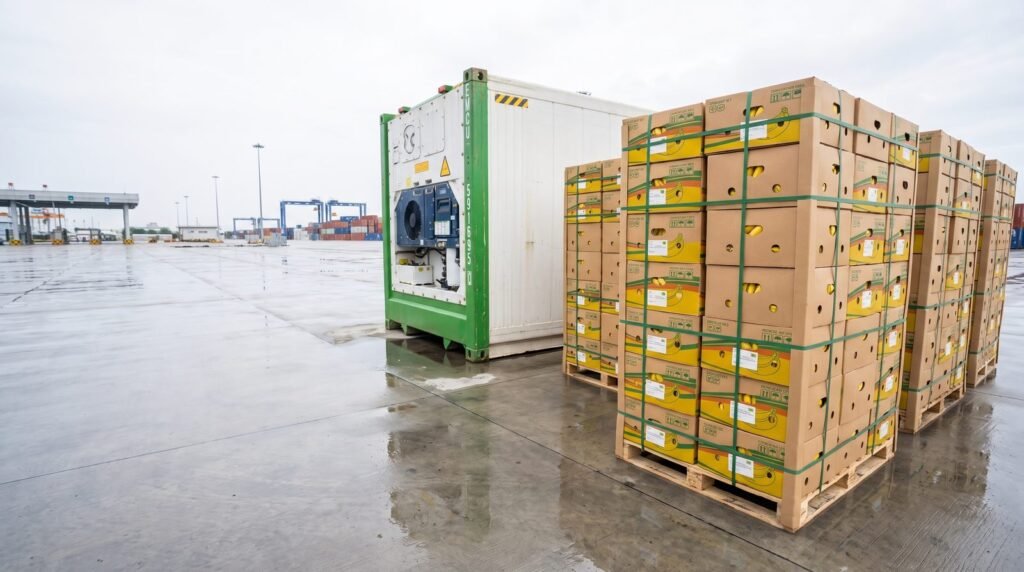
For a perishable cargo those days are part of the cold chain, not a queue. A container sitting through a release window has to stay powered and at setpoint, which is an arrangement rather than an assumption — see our note on reefer container settings for bananas.
What to have ready
- SFA licence active, ACRA UEN activated with Customs, GIRO in place
- TradeNet permit applied for with correct HS and product codes, in English
- Phytosanitary certificate from the Vietnamese agriculture ministry
- Cartons labelled with country of origin and packing plant
- An agreed residue programme referenced to the Ninth Schedule, with Codex as the fallback
- The certificate of origin form your broker wants — Form D under the ASEAN agreement
The full document set from the exporting side is in our guide to how to import bananas from Vietnam.
Working with Dragon Hub
Dragon Hub packs and exports Cavendish bananas to supermarket and wholesale buyers across Asia and the Middle East. Send us your permit conditions and your residue list rather than a summary of them, and the cartons and the paperwork get built to those conditions instead of to a default. The full specification is on the Cavendish banana page, alongside the rest of our product range.
Frequently asked questions
Do I need an SFA licence to import fresh fruit into Singapore?
Yes. Fresh fruits and vegetables fall in the licence category rather than the lighter registration category used for processed food. The licence for import or transhipment runs at about 281 Singapore dollars a year with roughly one working day of processing, plus an express option at an additional equal fee.
What is needed before applying for the SFA licence?
ACRA registration with a valid UEN, that UEN activated with Singapore Customs, and a GIRO account with SFA. Registration with ACRA alone is not sufficient — the activation step with Customs is what lets the permit system recognise the company.
Is a permit needed for every shipment?
Yes. An import permit is required per consignment through TradeNet, at 3 Singapore dollars for fresh fruit and vegetables. Weekday applications are intended for approval within one working day; weekend and holiday submissions are processed the next working day. The approved Cargo Clearance Permit serves as the SFA import permit.
Does my Vietnamese packhouse need to be registered with SFA?
No. Fresh fruit and vegetables do not require overseas facility registration. Instead the produce must come from suppliers under proper supervision of approved overseas regulatory authorities, and external cartons must be labelled with the country of origin and the packing plant.
Sources
- Singapore Food Agency: licence versus registration categories, per-consignment permits through TradeNet, permit fees and inspection booking
- Singapore FAIRS country report: licence cost and processing time, ACRA and GIRO prerequisites, Ninth Schedule and Codex residue limits, carton labelling, release times
