
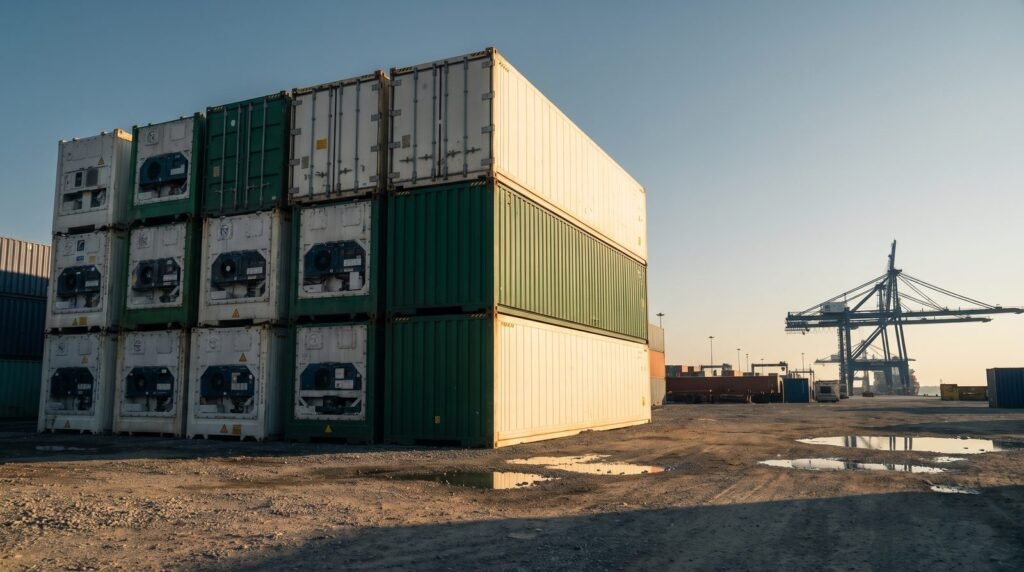
A price quoted “delivered Jebel Ali” means very little until the seller knows which of three routes the container takes once it is discharged. The route decides which customs declaration is filed, which documents go with it, whether duty is assessed at all, and whether VAT enters the picture. The Jebel Ali customs clearance fresh fruit faces is not one procedure but three, and a quotation built for one of them is wrong for the other two.
None of this is folklore. Dubai Customs publishes the document set for every declaration type, so buyer and supplier can agree the route before the booking rather than after the reefer is on the quay.
The Jebel Ali customs clearance fresh fruit faces: three routes
Route one: into the free zone
Cargo entering the Jebel Ali free zone is declared as a free zone transit in: air waybill or bill of lading, commercial invoice, certificate of origin, packing list and delivery order. Duty is suspended on goods admitted to a free zone, as it is in transit, in a customs warehouse or under temporary admission.
Jebel Ali Free Zone, north and south, also sits on the Cabinet’s list of designated zones for VAT — which is why free zone traders describe fruit as outside the tax net while it stays inside the fence.
Route two: into the mainland
Clearing into the UAE market is a different declaration depending on where the cargo starts. An import to local from outside the customs union takes the same five core documents, plus any applicable permit. An import to local out of a free zone is lighter on paper — delivery advice, invoice, packing list, permit for restricted goods — but applicable duty must be paid at that point.
That is the split worth understanding: the free zone defers the question, and the move to the mainland answers it.
Route three: import for re-export
Fruit landing in Dubai to go on somewhere else is declared as an import for re-export, and that declaration carries money with it. The documents match a normal import, but Dubai Customs requires a deposit or guarantee equal to the applicable tariff, limited to consignments valued above 20,000 dirhams except for vehicles.
The deposit comes back only if the goods are exported within six months of that declaration. Claim late and the deductions bite: 15 per cent one to 60 days after expiry, 30 per cent at 61 to 90 days, 45 per cent at 91 to 120 days, and rejection after that. Regular traders post a standing guarantee instead, minimum 25,000 dirhams, or run a credit account at a minimum of 10,000 dirhams.
Whether duty is payable at all
Here the published sources do not agree, and a supplier quoting a landed cost should know that before inventing a number. The Dubai Customs customer guide puts the GCC common customs tariff at five per cent of CIF value on goods from outside the customs union, and its exemption list covers diplomatic, military, charitable, returned and industrial goods — not foodstuffs.
The UAE’s own published list of commodities exempted from customs duty, however, includes bananas including plantains, fresh or dried, under heading 0803, along with most of the rest of the fresh fruit chapter and fresh vegetables.
So neither five per cent nor zero should go into a quotation on trust. Get the rate confirmed in writing against the exact tariff line, by the broker who will file the declaration. What the route reliably changes is not the rate but the moment the question is asked: suspended in a free zone, in transit, in a warehouse or under temporary admission, and settled on entry to the mainland.
Value added tax is separate from duty. Supplies out of a designated zone into the mainland carry VAT at five per cent, accounted for by the mainland recipient under the reverse charge where registered. That is the importer’s question for its tax adviser, not one an exporter should answer by email.
The code on the declaration has just changed
This is the detail most guides have not caught up with. Under Cabinet Resolution 119 of 2024 the GCC moved from eight-digit to twelve-digit tariff codes, based on the 2022 edition of the Harmonized System, with the rollout starting in August 2025 and running in phases.
Dubai Customs ties the code length to the declaration type. Twelve-digit codes apply to declarations re-exported to GCC countries and to imports into the local market; eight-digit codes stay in use for declarations re-exported to free zones and the rest of the world, and for the exempted flows such as GCC trade, transit and transfers within a free zone. In other words, the route a buyer picks also decides which code the broker quotes. A verified classification can be requested from Dubai Customs and is quoted at one working day, and there is a classification app to narrow it down first.
What each route costs, and the clock at the gate
Declaration fees are published and modest, but they differ by route: an import to local is 70 dirhams for dutiable goods and 80 for non-dutiable, a free zone transit is 80, and an import for re-export or a re-export declaration is 100. A straight transit through the union is 50 dutiable and 15 non-dutiable, permitted for 30 days from clearance. Add an innovation fee of 10 dirhams per transaction and 5 dirhams per completed declaration for archiving.
The fee that hurts is for paperwork filed late: 50 dirhams a day after the 14-day grace period, up to 90 days.
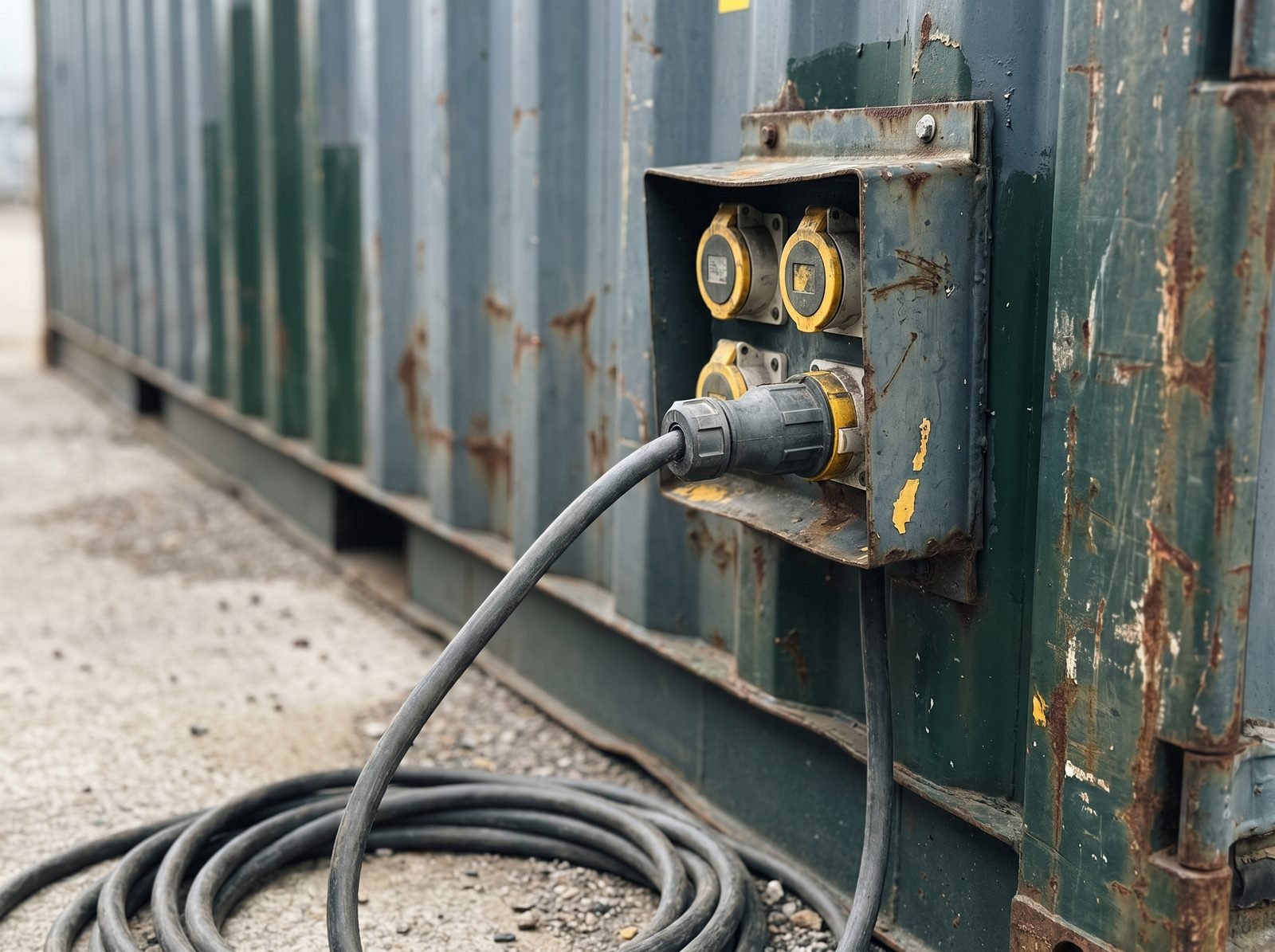
- Free time starts when the cargo arrives at Jebel Ali, which for a reefer means the demurrage and plug-in clock runs while the declaration is being sorted out
- Inspections have to be completed before cargo delivery, so a booked inspection sits inside that window rather than after it
- Trucking is gated by an e-token or gate booking generated through the terminal’s own booking channels, not by turning up
For fresh fruit that sequence is the whole ball game. A dry container can wait a week; a reefer of bananas is burning green life the entire time, and the arithmetic behind that is in our note on how many days of green life a banana shipment really has.
What to settle before quoting
Ask the buyer which route the cargo takes, who files the declaration, and who carries the duty and tax risk if the route changes mid-voyage — then write it into the terms rather than the covering email. The Incoterms rule decides most of it, as set out in our guide to Incoterms for reefer fresh produce, and the demand side of the market is in our overview of importing bananas to the UAE and the Gulf.
Working with Dragon Hub
Dragon Hub packs and exports Cavendish bananas to supermarket and wholesale buyers across Asia and the Middle East. Tell us the route and the declaration type your broker will file, and the invoice description, the certificate of origin and the packing list are issued to match it, which is what keeps a first container from being amended at the counter. Pack sizes and specifications are on the product range page.
Frequently asked questions
Is customs duty payable on bananas imported into the UAE?
The published sources conflict. Dubai Customs states the GCC tariff as five per cent of CIF with no food exemption in its list, while the UAE’s own list of exempted commodities includes bananas under heading 0803. Confirm the rate against the tariff line with the broker filing the declaration before relying on either figure.
How long is the re-export deposit held?
The deposit or guarantee equals the applicable tariff and is refundable only if the goods are exported within six months of the import for re-export declaration. Late claims lose 15 per cent in the first 60 days after expiry, 30 per cent to 90 days and 45 per cent to 120 days, after which they are rejected.
Do I need a twelve-digit HS code for fruit at Jebel Ali?
It depends on the declaration. Dubai Customs applies twelve-digit codes to imports into the local market and to re-exports to GCC countries, and keeps eight-digit codes for re-exports to free zones and the rest of the world and for exempted flows. A verified classification can be requested and is quoted at one working day.
Sources
- Dubai Customs customer guide: documents by declaration type, duty suspension for free zones, transit and warehousing, the five per cent GCC tariff on CIF and the exemption categories, the re-export deposit with its 20,000 dirham threshold, six-month window and 15, 30 and 45 per cent deductions, account minimums, declaration fees and the 50 dirham daily late document charge
- UAE list of commodities exempted from customs duty: bananas including plantains, fresh or dried, under heading 0803, with the rest of the fresh fruit chapter and fresh vegetables
- Dubai Customs, integrated customs tariff and the move to twelve-digit codes: Cabinet Resolution 119 of 2024, the 2022 Harmonized System basis, the phased rollout from August 2025, which declaration types use which code length, and the one working day reclassification service
- Cabinet Decision 59 of 2017 on designated zones: Jebel Ali Free Zone north and south listed as a designated zone, and VAT at five per cent on designated zone supplies into the mainland
- DP World customer guide, Jebel Ali: free time starting on arrival at Jebel Ali, inspections to be completed before cargo delivery, and e-token or gate booking through the terminal’s booking channels
