
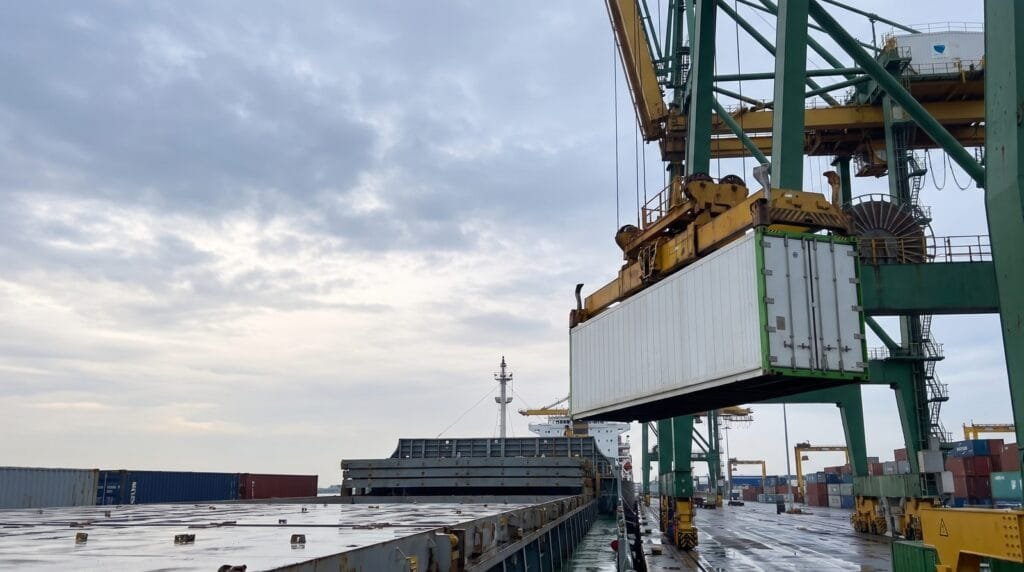
A reefer arrives warm. The fruit is ripe, the container is a write-off commercially, and the first question is not technical. It is: whose loss is this?
Most buyers answer it from memory of dry cargo, and most get it wrong. Incoterms for reefer fresh produce behave differently from how people assume, and the difference costs real money exactly once.
Incoterms for reefer fresh produce: all three terms pass risk in the same place
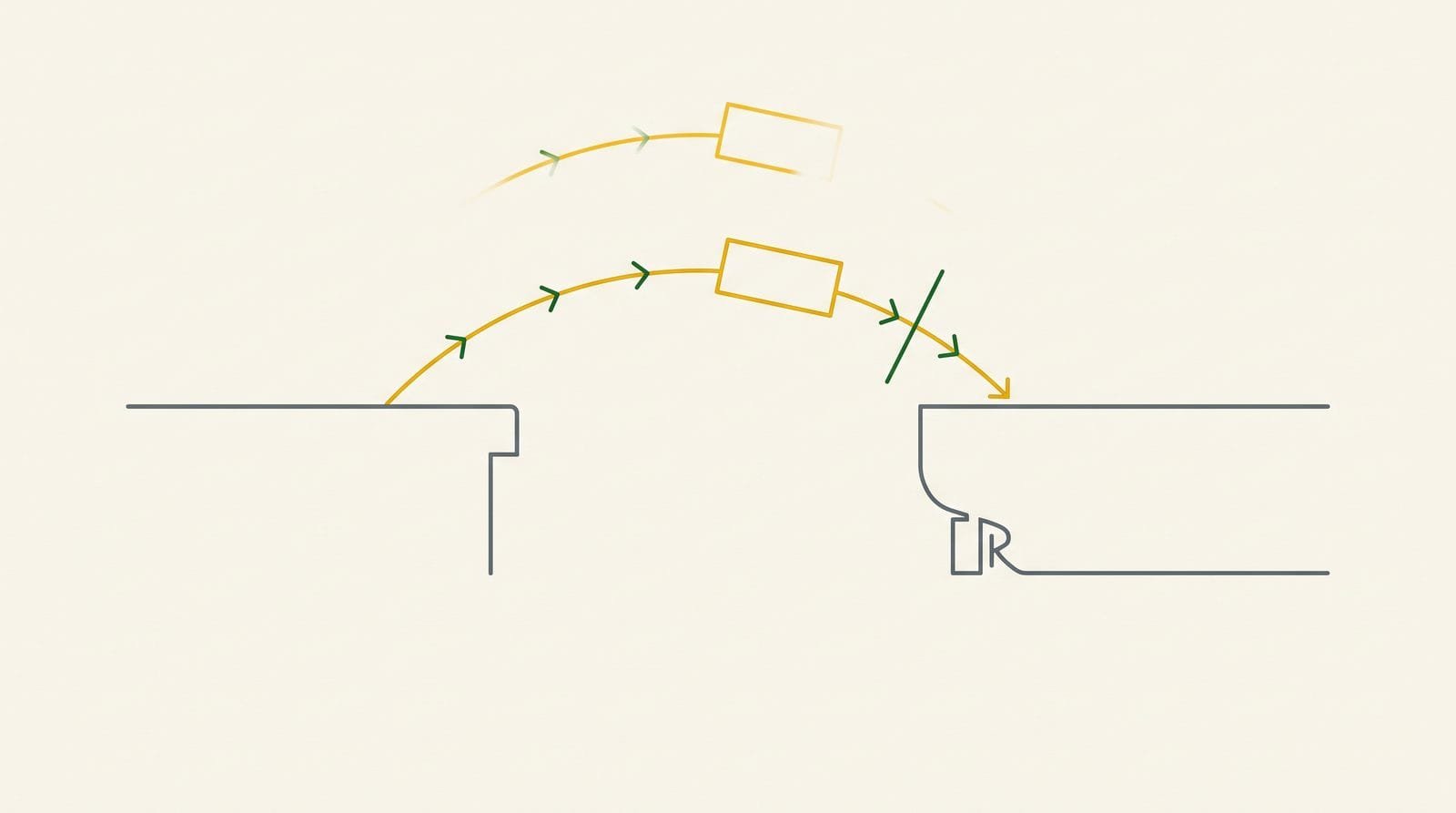
FOB, CFR and CIF are the terms fresh produce actually moves on. Under Incoterms 2020 all three transfer risk at the same moment: when the goods are placed on board the vessel at the port of shipment.
| Term | Who books and pays freight | Who buys insurance | Risk passes |
|---|---|---|---|
| FOB | Buyer | Buyer | On board |
| CFR | Seller | Buyer | On board |
| CIF | Seller | Seller (minimum cover) | On board |
Read the last column again. Under CFR and CIF the seller pays the freight and arranges the voyage, but the cargo is at the buyer’s risk for the whole of it. Paying for carriage and bearing risk of carriage are two different things, and the terms deliberately separate them.
So for anything that happens between loading and discharge — a compressor that fails, a setpoint entered wrong, a container that sits on a quay during a transhipment — the loss sits with the buyer under all three terms.
The CIF trap
CIF looks like the safe choice because the seller buys insurance. Read what that obligation actually is.
Under CIF the seller must provide cover at a minimum of Institute Cargo Clauses (C), for at least 110 % of the invoice value. ICC (C) is a named-perils policy: it responds to a defined list — fire, explosion, the vessel sinking or stranding, collision, general average, jettison. If a loss is not on the list, it is not covered.
Refrigeration machinery breakdown is not on that list. Neither is a temperature excursion from a mis-set controller. A buyer holding a CIF contract and a certificate of insurance can therefore be completely uninsured for the single most likely way a banana container fails.
Cover for that exists — it is bought as a specific refrigerated-cargo extension, usually with a deductible expressed in hours of breakdown. It has to be asked for. It is never the default, and it is not what the CIF obligation provides.
What this means in practice
- Do not read CIF as “insured”. Read it as “insured against a short list that excludes the reefer failing”. If you want breakdown cover, specify the clauses and the extension, or buy your own policy.
- On FOB you control the carrier. You nominate the vessel and the line, which means you choose who is responsible for the machinery and whose monitoring you can call on mid-voyage. That is worth more on reefer cargo than on dry.
- CFR is often the quiet worst of both. The seller picks the carrier, you carry the risk, and you have no relationship with the line when something goes wrong.
- Whatever the term, agree the inspection point. Where and when quality is assessed decides most disputes before they start.
The evidence problem
Knowing whose risk it is only matters if you can prove what happened. Reefer claims turn on the temperature record, and reading it needs care.
A container controls on delivery air — the air pushed under the floor — not on return air, and the return air sensor sits near the machinery where defrost cycles show up as spikes that mean nothing to the fruit. A trace can look alarming and be fine, or look clean while a badly stowed corner of the cargo sat too warm all voyage, because the sensor was never near it. What that record does and does not prove is set out in our note on reefer container settings for bananas.
Two practical habits are worth more than any clause: place your own recorder where it will be believed, and take pulp temperatures at discharge before the doors have been open long. A claim built on arrival temperature alone rarely survives contact with a surveyor.
Working with Dragon Hub
Dragon Hub packs and exports Cavendish bananas to supermarket and wholesale buyers across Asia and the Middle East. We would rather settle the incoterm, the inspection point and the temperature regime in the same conversation as the price, because arguing about any one of them after a container has misbehaved is expensive for everyone. The full specification is on the Cavendish banana page, alongside the rest of our product range.
Frequently asked questions
Who bears the risk of reefer failure under CIF?
The buyer. Under Incoterms 2020, CIF transfers risk when the goods are loaded on board, even though the seller pays the freight and buys insurance. Everything that happens during the voyage, including a refrigeration failure, is at the buyer’s risk.
Does CIF insurance cover refrigeration breakdown?
Not by default. CIF obliges the seller to provide only Institute Cargo Clauses (C) at 110 % of invoice value, a named-perils cover that lists fire, sinking, collision and similar events. Refrigeration machinery breakdown is not among them and needs a specific extension.
Is FOB or CIF better for fresh produce?
FOB gives the buyer control of the carrier and therefore of the reefer equipment and monitoring, which matters more on temperature-controlled cargo than on dry freight. CIF is simpler administratively but leaves the buyer carrying voyage risk with minimum cover. Neither changes where risk passes.
What evidence is needed for a reefer temperature claim?
The container’s own record read correctly, your own recorder positioned near the delivery air, and pulp temperatures taken at discharge before the doors have been open long. Return-air spikes during defrost are normal, and a clean trace does not prove an evenly cooled stow.
Sources
- CIF under Incoterms 2020: risk transfer on board, the Institute Cargo Clauses (C) minimum and the 110 % rule
- West of England P&I — carriage of reefer containers: delivery air versus return air and where to place a recorder
