
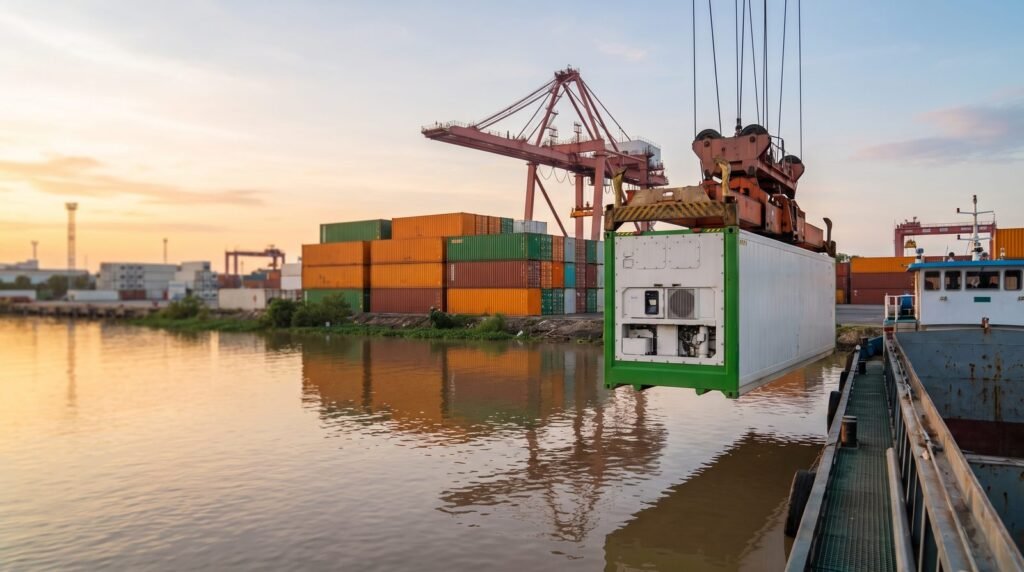
Ho Chi Minh to Singapore shipping is quoted at anything from one day to five. That is not a contradiction in the schedules. It is a difference in which terminal the box leaves from, whether the service is direct, and what the quote counts as the start.
For a banana programme the conclusion is the same whichever figure is right. Every one of them is small against the remaining life of the fruit, which means this lane is not won or lost at sea.
Ho Chi Minh to Singapore shipping: why the quoted transit varies
Route profiles for the lane disagree, and the disagreement is informative. One route database lists Cat Lai to Singapore at three days and six hours with two to four sailings a week, and puts Vung Tau to Singapore at under two days with departures several times a day. A Vietnamese forwarder publishes four to five days port to port with four to five sailings a week, quoting Ho Chi Minh, Cai Mep, Da Nang and Hai Phong together.
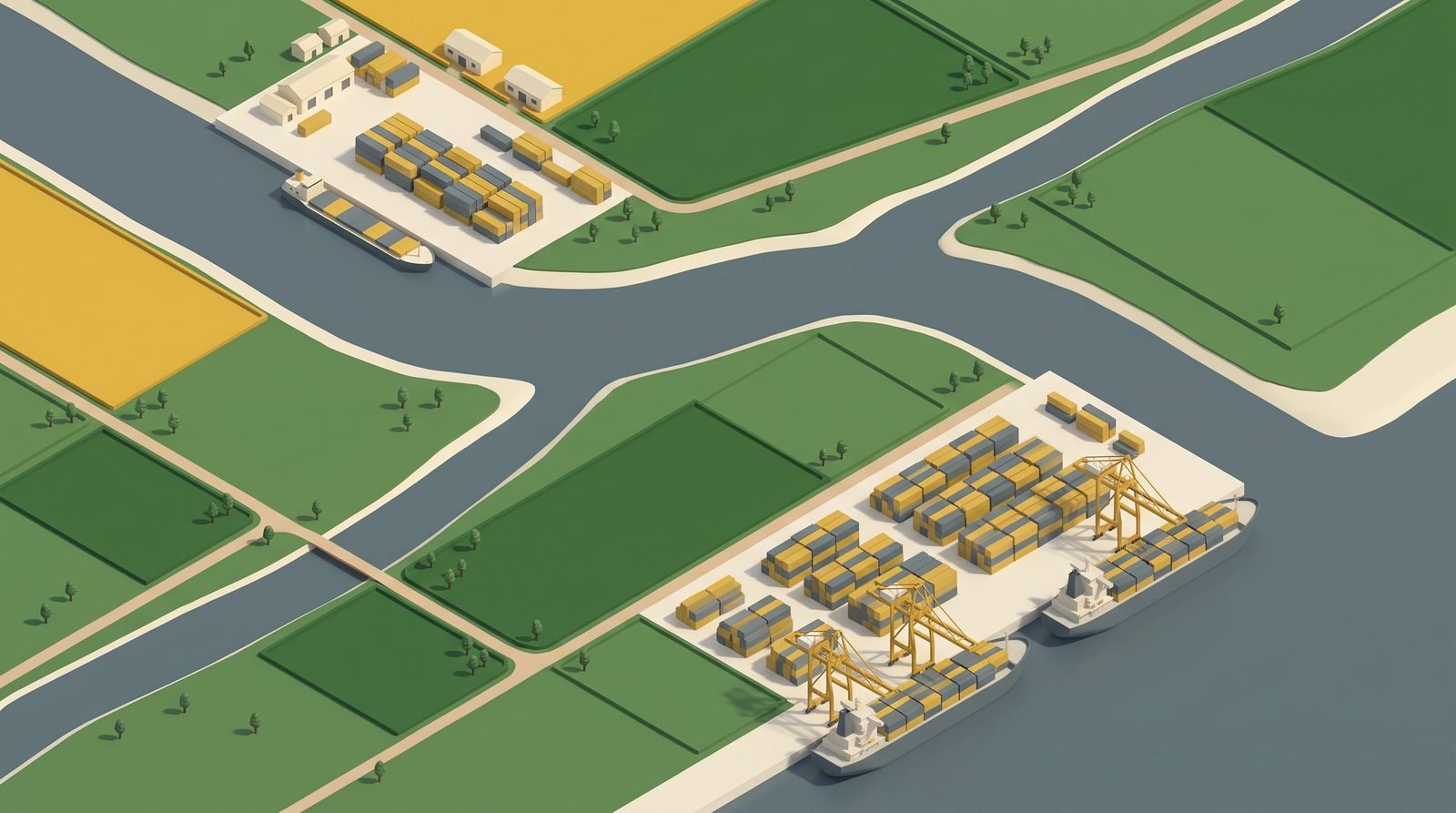
Three things explain most of the spread. The load port matters, because Cai Mep and Vung Tau sit near the river mouth while Cat Lai sits upriver behind a barge or truck leg. Whether the box moves on a direct service or is transhipped matters more. And a transit that begins at container cut-off is a different number from one that begins when the vessel sails.
So ask for three things instead of a single figure: the load port being quoted, whether the service is direct, and cut-off to discharge rather than port to port. A quoted two days that hides a transhipment can double on one missed connection, and the waiting is done by a reefer that has to stay plugged in.
Against green life, all of those numbers are small
Mature-green Cavendish has a postharvest life potential of two to four weeks in air at 14 °C. Set five days against the bottom of that range and the voyage consumes under a third of the window. Set one day against it and the ocean leg is close to a rounding error.
That is the reverse of a South American programme into Asia, where the vessel eats most of the window, every cut has to be lean and everything has to run on time. Here you have margin. The real question is what you spend it on, and our note on banana green life sets out how the window is spent and what a day of delay actually costs.
Which moves the constraint onshore
When the sea leg is one to five days, the days that decide the outcome sit on either side of it.
- Hours between cutting and cold. Field heat is the most expensive delay in the chain. A full day before cooling has been measured to cost several days of green life, which on this lane is more than the entire voyage.
- Clearance at the destination. A consignment held for inspection, or waiting on a licence condition nobody checked upstream, spends real days on a route where the ship spends two. The licensing side is in our note on the SFA licence.
- The ripening room. Whatever happens after discharge is now a larger share of total elapsed time than the freight is, and it is the part most programmes plan last.
The useful question to a supplier here is not how long the voyage takes. It is how many hours pass between the bunch coming off the plant and the pulp reaching 14 °C.
Frequency changes how you can buy
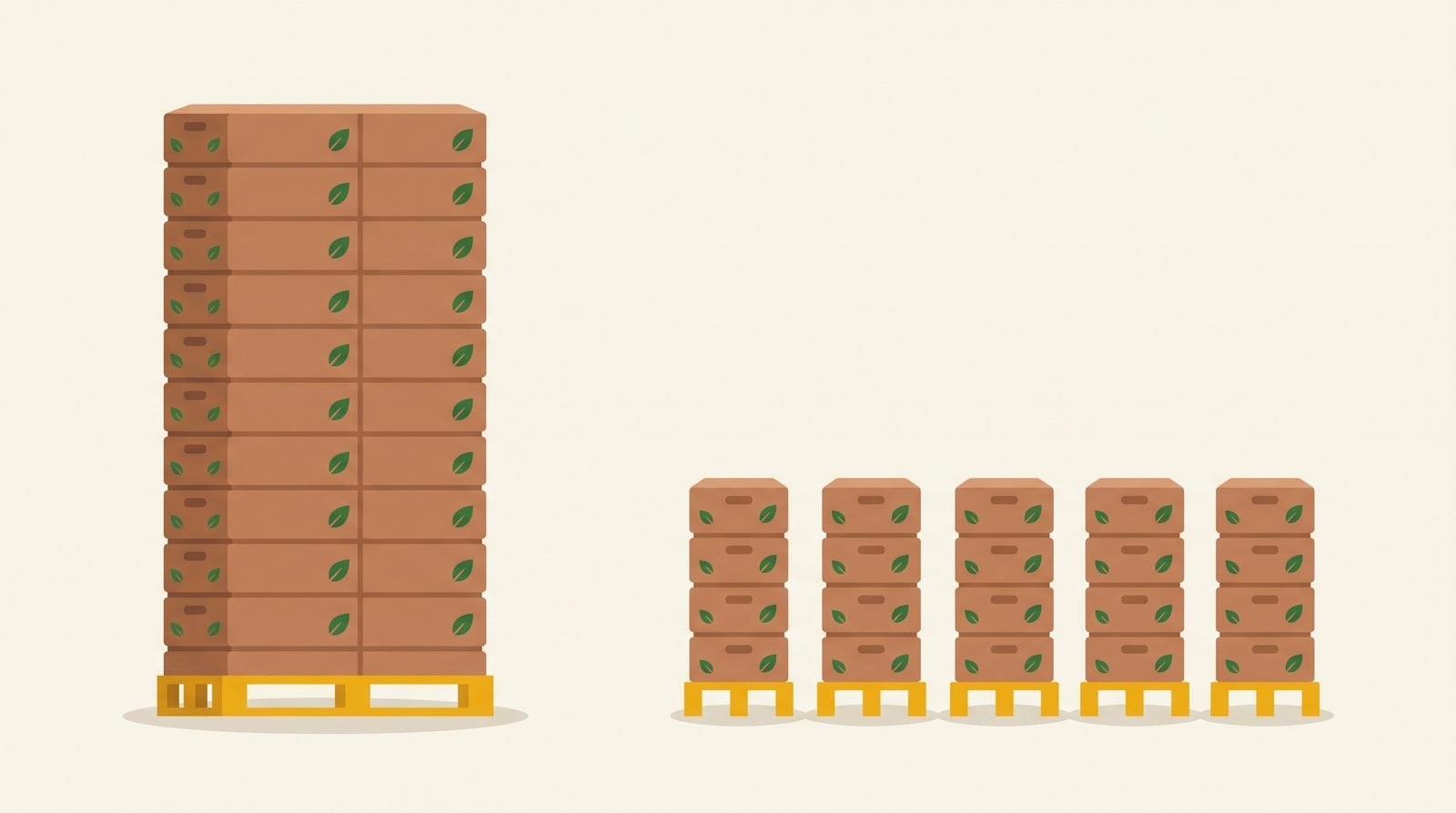
Two to four sailings a week from Cat Lai alone, and more than that from the deep-water terminals, allows a rhythm that a three-week lane cannot support: smaller consignments, more often.
Three effects follow. Fruit on the shelf is younger, because less of its life was spent getting there. Risk per shipment is smaller, so one bad container is a smaller event than one bad container in a monthly programme. And a specification problem surfaces within a week rather than after three, before two more containers have sailed behind it.
The cost is handling and documentation per kilo, which rises as consignment size falls. Whether the trade is worth it depends on your storage and your turnover. The point is that this lane offers the choice and most lanes do not.
A short voyage does not forgive a wrong setpoint
Chilling injury is a matter of dose and time rather than a cliff the fruit falls off. Moderate injury in mature-green fruit has been recorded after one hour at 10 °C, five hours at 11.7 °C, twenty-four hours at 12.2 °C, or seventy-two hours at 12.8 °C. Transport sits at 13 to 14 °C for that reason.
Damaged fruit will not ripen properly afterwards, and the failure shows in the ripening room rather than at the door. A two-day crossing protects you from almost none of this, and the most common place to lose the regime is a container left unpowered during an inspection.
How it compares with the Malaysian lane
Buyers often run both. The sea legs are comparable in kind, both short and both frequent, and the planning logic transfers: our note on Ho Chi Minh to Port Klang makes the same argument at more length. What differs is onshore. Two import regimes, two inspection practices, two document sets. Plan the lane once, write the compliance per market.
What to put in the enquiry
- The load port you want quoted, and whether the service is direct or transhipped
- Cut-off to discharge, not port to port
- Hours from cutting to the cold room
- Cutting maturity, agreed explicitly, and whether you want fullness or a reserve against delay
- Carton net weight and stow pattern, fixed before quotations are compared
- Who keeps the reefer powered during inspection at the destination
Working with Dragon Hub
Dragon Hub packs and exports Cavendish bananas to supermarket and wholesale buyers across Asia and the Middle East. On a lane this short we would rather spend the conversation on cutting maturity and cooling hours than on freight rates, because that is where arriving quality is decided. Full specifications are on our product pages, and we will answer against a specification you already work to.
Frequently asked questions
How long does shipping take from Ho Chi Minh to Singapore?
Published figures run from about one day to five, depending on the load port and whether the service is direct. Cat Lai is quoted at a little over three days with two to four sailings a week, while terminals nearer the river mouth are quoted at under two. Ask for cut-off to discharge rather than port to port.
Does a short voyage mean I can buy fuller fruit?
It makes fuller fruit possible, and fuller fruit eats better after ripening. The alternative is to keep the spare days as insurance against a missed sailing or a held container. Either is defensible. What matters is that the choice is made before harvest rather than assumed by one side.
What matters most on a lane this short?
The hours between cutting and cooling. Field heat removes more of the fruit’s remaining life than the crossing does, so a supplier who cannot say how long the fruit waits before it reaches the cold room has not answered the question that decides your arrival quality.
Can I ship smaller, more frequent consignments?
The sailing frequency allows it, with two to four departures a week from Cat Lai alone. The limits are commercial rather than logistical. Handling and documentation cost per kilo rises as consignment size falls, and your own storage and turnover decide whether the tighter rhythm pays for itself.
Sources
- Fluent Cargo — Ho Chi Minh City to Singapore: transit times and sailing frequency by load port
- Ocean freight Vietnam to Singapore: four to five days port to port and four to five sailings a week across Vietnamese ports
- UC Davis Postharvest — Banana: green life potential, transport temperature and the chilling injury dose and time table
