Seedless Lime
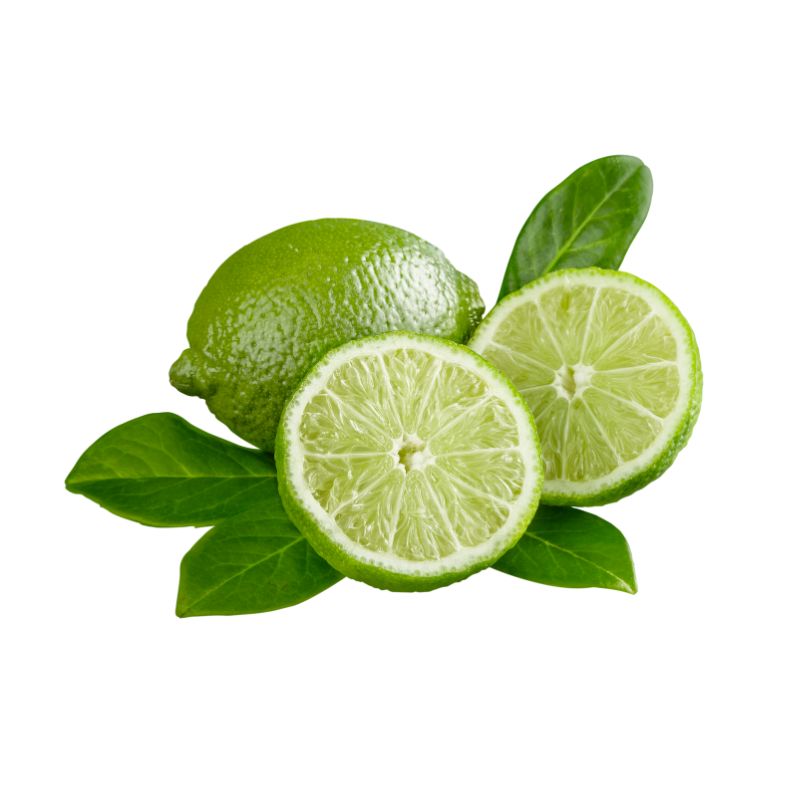
Seedless lime (Citrus latifolia) grown in the Mekong Delta and packed for export — graded S, M and L by piece count, in 5, 8 or 10 kg cartons or to your own spec. Available year-round, with peak volume May to September.
Description
Seedless lime is Vietnam’s most straightforward citrus export: one variety, one colour, graded by count rather than by weight, and available every month of the year. The fruit is Citrus latifolia — the Persian or Tahiti lime — and it is sold and shipped as a lime, not a lemon, whatever the local trade name suggests.
That point is worth settling early because it causes real confusion. In Vietnamese the fruit is chanh không hạt, which is often translated to English as “seedless lemon”. What arrives in the container is a small, thin-skinned, deep green lime with no seeds and high juice content. If your specification says lemon and you expect a large yellow Citrus limon, this is not that fruit.
Sizes and packing
Limes are graded by pieces per kilogram, so a higher number means smaller fruit. This is the opposite of how mango or pomelo grades read, and it is a common source of ordering errors.
| Grade | Pieces per kg | Fruit size | Typical use |
|---|---|---|---|
| S | 18 – 22 | Smallest | Bar and beverage service, wedge cutting, high piece count per carton |
| M | 14 – 17 | Mid | General retail and foodservice; the most widely ordered grade |
| L | 8 – 10 | Largest | Retail display and juicing, where yield per fruit matters |
Cartons are packed at 5 kg, 8 kg or 10 kg, or to your own specification. Carton weight is not a detail — it sets your shelf price per piece and your handling cost per pallet, so decide it before you compare quotes rather than after.
Specification
| Product | Fresh seedless lime (Citrus latifolia) |
| Origin | Vietnam — Mekong Delta |
| Grades | S: 18 – 22 pcs/kg · M: 14 – 17 pcs/kg · L: 8 – 10 pcs/kg |
| Carton | 5 kg, 8 kg, 10 kg, or to buyer specification |
| Storage temperature | 3 – 6 °C |
| Shelf life | 60 days |
| Season | Year-round; peak May to September |
| Minimum order | One reefer container |
Keeping the fruit green
With most fruit the buyer worries about ripeness. With limes the worry is colour. A lime that turns yellow has not spoiled, but it has lost most of its retail value, and the change is one-way.
Ethylene is what causes it. Limes exposed to ethylene lose their green pigment and the yellow underneath shows through — which is why limes must never share a container or a cold room with ripening fruit such as banana, mango or avocado. Mature-green fruit holds far better than fruit picked already turning, so the maturity at harvest matters as much as anything that happens afterwards.
Rind condition is the other half. Limes are thin-skinned, and any pitting or brown sunken patches on arrival trace back to how the fruit was held, not to how it was grown. Tell us your route and your destination temperature and we will set the loading regime against it rather than shipping to a default.
Supply through the year
Seedless lime is grown across the Mekong Delta — Long An, Ben Tre and Tien Giang are the main provinces — with further volume from Binh Duong and Dong Nai in the southeast. Between them the crop runs continuously:
- May to September — peak, highest volume and best pricing
- October to January — steady supply
- February to April — lower volume, firmer prices
For a buyer running a year-round programme this is the argument for Vietnam over origins with a narrow window: you contract once and the calendar is covered. If your volume is concentrated in February to April, say so at enquiry — that is the tightest part of the year and it needs planning, not a spot order.
What to send us for a quote
- Grade — S, M or L, and whether mixed grades are acceptable
- Carton weight, and whether the print is yours, neutral or ours
- Destination market and port, and the transit time you are planning for
- Volume per shipment and frequency across the year, not just the first order
- Any market-specific requirement — treatment, residue testing, certification
- Incoterm
Dragon Hub processes, packs and exports Vietnamese fruit to supermarket and wholesale buyers across Asia and the Middle East. Seedless lime sits alongside Cavendish bananas, mango, pomelo, dragon fruit and coconuts in our product range. Send the list above and you will get a specific answer, including where we would push back.
Frequently asked questions
Is Vietnamese seedless lime a lime or a lemon?
It is a lime — Citrus latifolia, the Persian or Tahiti type. The Vietnamese name chanh không hạt is often translated as “seedless lemon”, which is why both terms appear in the trade. The fruit is small, thin-skinned, deep green and seedless.
How are seedless limes graded?
By pieces per kilogram, so a higher number means smaller fruit. S is 18 – 22 pcs/kg, M is 14 – 17, and L is 8 – 10. M is the most widely ordered grade. Confirm the grade in writing, because the count convention runs opposite to weight-based grading.
Why do limes turn yellow, and can it be prevented?
Ethylene strips the green pigment and reveals the yellow beneath. It cannot be reversed. Keep limes away from ripening fruit in storage and transit, ventilate to remove accumulated ethylene, and start with mature-green fruit rather than fruit already turning.
Is seedless lime available all year?
Yes. Peak volume runs May to September, supply is steady October to January, and February to April is the low period with firmer prices. A year-round contract is easier to hold than a series of spot orders, particularly through the February to April window.
What carton sizes are available?
5 kg, 8 kg and 10 kg as standard, or to your own specification. Carton weight drives your price per piece on shelf and your handling cost per pallet, so fix it before comparing quotes.